Puppy loss carries a particular weight that is hard to explain: the grief of what was supposed to come, layered on top of the grief for what was. A dog who died young was not just a pet lost — the relationship was a beginning that did not continue, and the absence is shaped by all the years that were supposed to happen.
The source materials after puppy loss are often limited. A few months of photos, one or two vet records that may include a paw impression, a name the family used for only a short time. All of these are real and all of them are usable. A ring does not need years of accumulated keepsakes to be honest about a brief but complete bond.
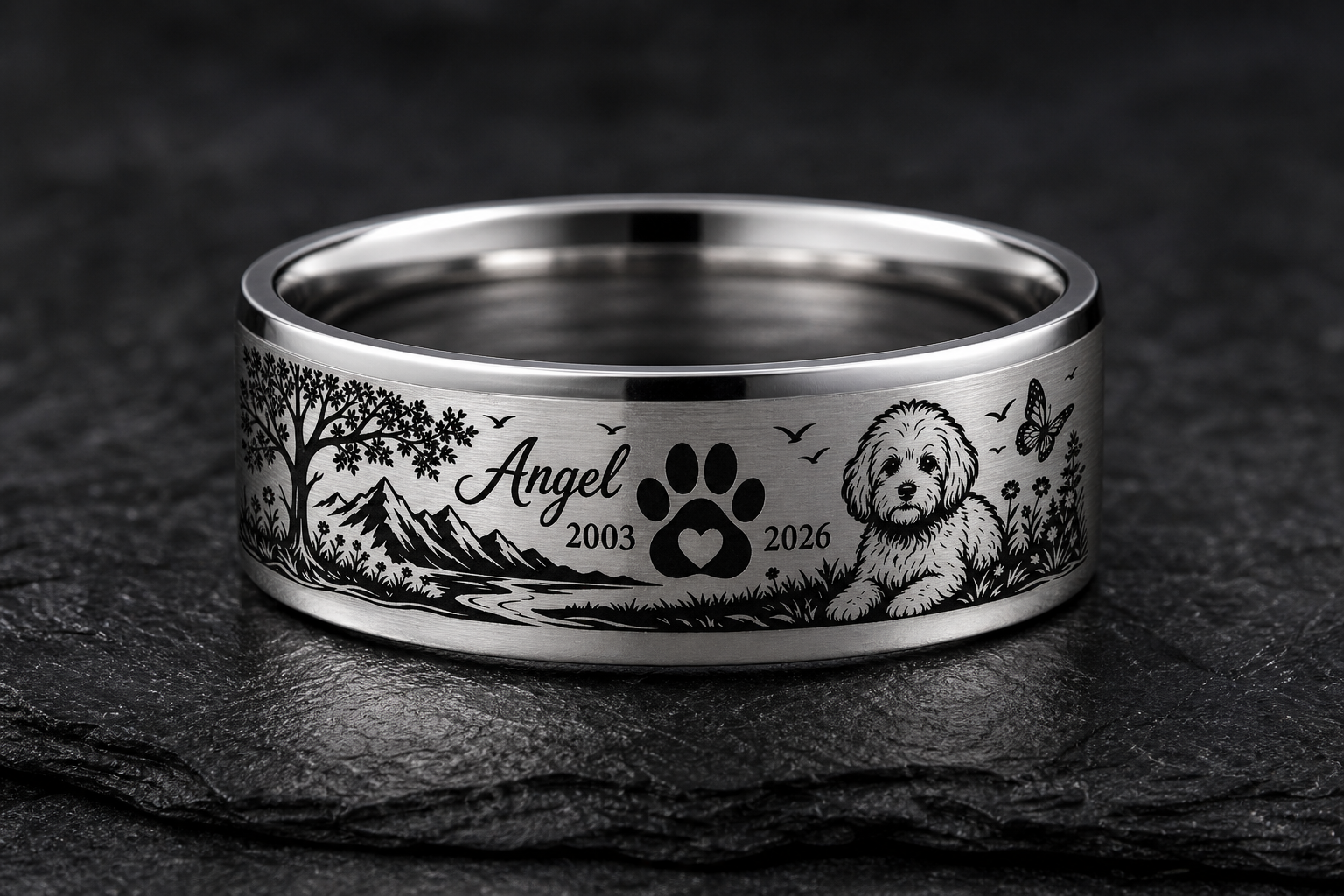
A name used for only a few weeks is still the puppy's name. It was chosen before they arrived or in the first days of getting to know them, and using that name on the ring treats the dog as the individual they were, not an interchangeable pet. Engrave it as used, including any nicknames that developed quickly in those first weeks.
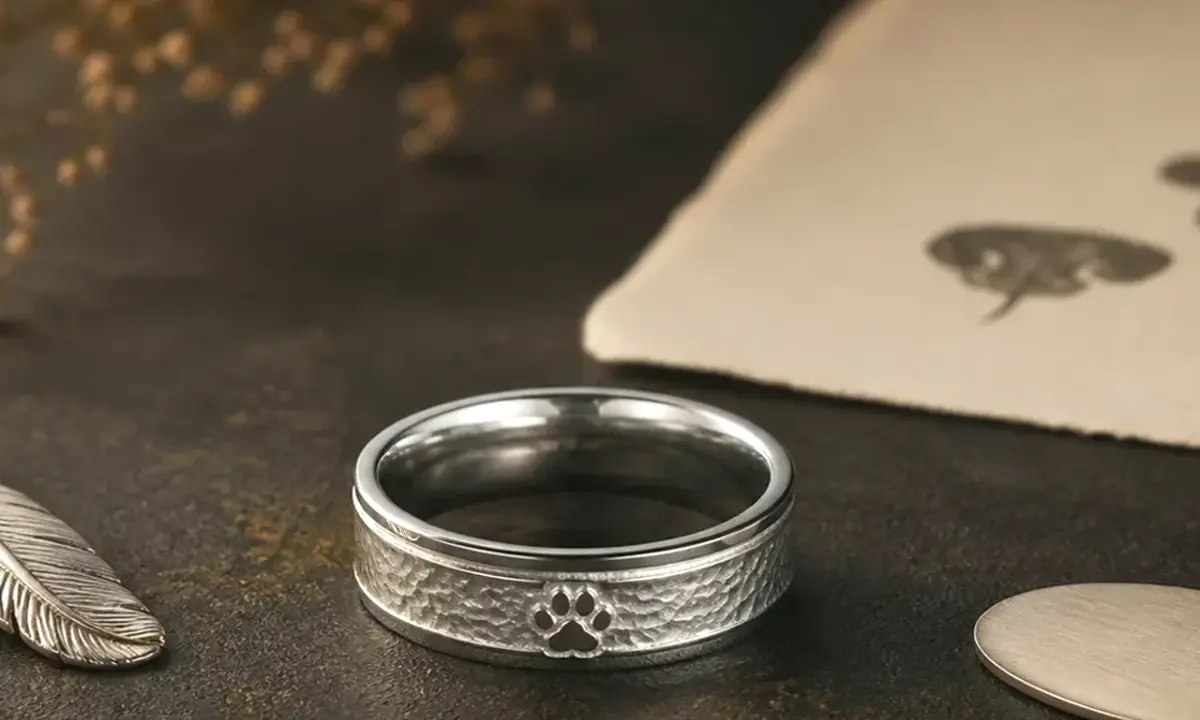
Paw prints from young dogs are often smaller and sometimes lighter than prints from adults, which means a vet visit record or an early ink impression can read differently on a ring. A smaller print can be positioned as a single centered mark rather than a full-wrap detail. The size itself tells part of the story.
Photos from a puppy's early weeks often capture a quality of aliveness that later photos of older dogs do not: the too-big paws, the still-growing ears, the constantly moving expression. If the clearest photo shows the puppy young and unfinished, use it. The silhouette from that photo is the truest portrait of who they were.
Dates need care with puppy loss. Some families want both dates to acknowledge the full span; others want only the arrival date, because that is when the joy started, or only the name, because the dates feel too condensed to repeat every time they look down at the ring. Decide based on what the wearer can carry on an ordinary day.
Inside engraving handles the most private part of puppy loss quietly. A phrase about potential, an acknowledgment of what was supposed to come, or simply the name and dates inside the band while the outside stays clean — this lets the ring be worn through normal days without requiring the wearer to be in full grief mode to look at it.
Siblings in the family, especially children, often grieve puppy loss intensely. A small matching ring or a charm with the puppy's name can give a child a way to carry the same grief in an age-appropriate form, without making a permanent adult ring decision for them.
If the loss happened suddenly — an accident, a rapid illness, a condition that was not known — the grief often has a shock quality alongside the ordinary loss. Designing a ring after this kind of death sometimes takes longer, and the first version made quickly may not be the version the wearer keeps. The designer can be returned to.
When the name, the dates that feel honest, and the clearest available source image are settled, bring them into the Friends of Irony designer with one line about the dog and what was supposed to come. The ring does not need to carry the whole weight of the loss; it only needs to carry enough to help on ordinary days.