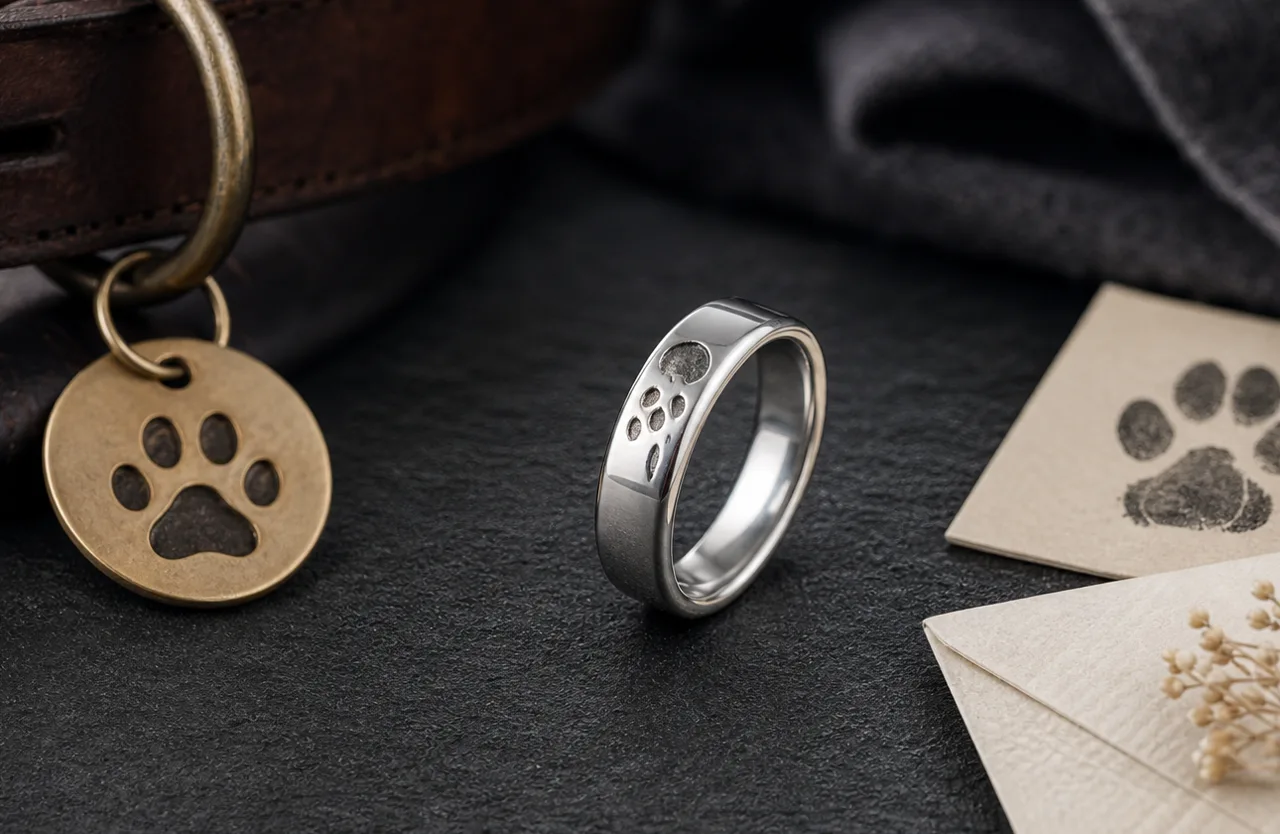
A dog remembrance ring is less about making the saddest possible object and more about keeping one true part of the bond close. The best starting point is often ordinary: the name you still say, the collar tag you cannot put away, or the spot where the dog always waited.
Choose one anchor from the sources you actually have. A paw print, nose print, collar tag, favorite photo, name, adoption date, trail memory, or nickname can all work when one of them clearly feels like the dog.
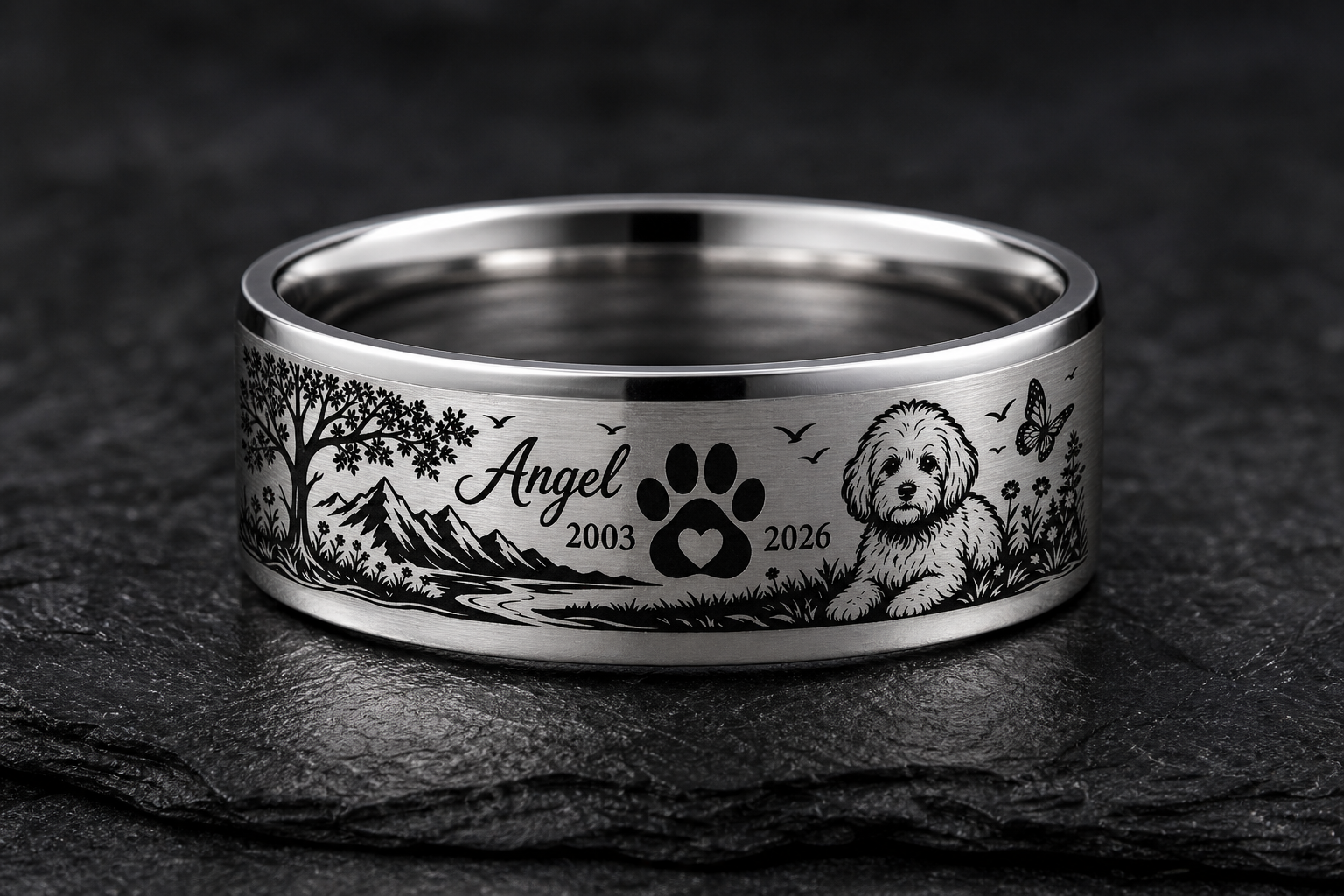
If the ring will be worn every day, avoid turning the outside into a full pet memorial collage. One visible mark with one private line inside usually carries more dignity than several small symbols fighting for space.
A name-first design can be just as personal as a print design. If the dog's name is the word that still catches in the room, give that name enough room to read.
Paw prints and nose prints need clean source files. Use the sharpest original image, scan, or vet-card print rather than a compressed screenshot.
Photos can become silhouettes or profile marks. The outline of ears, sitting posture, or favorite toy may read better on metal than a detailed face.
Inside engraving can carry the phrase that feels too tender for public view: Still Home, My Shadow, Ride Along, Good Boy, Sweet Girl, Always Near, or the dog's real nickname.
If this is a gift, confirm whether the recipient wants the dog's name visible. Some people welcome the conversation; others need the memory to stay private.
The design is ready when one detail makes the family say, yes, that was our dog. If the ring needs five clues to make sense, remove the weakest ones.
Bring the dog's name, one best source image, date preference, privacy choice, and a short memory note into the Friends of Irony designer.