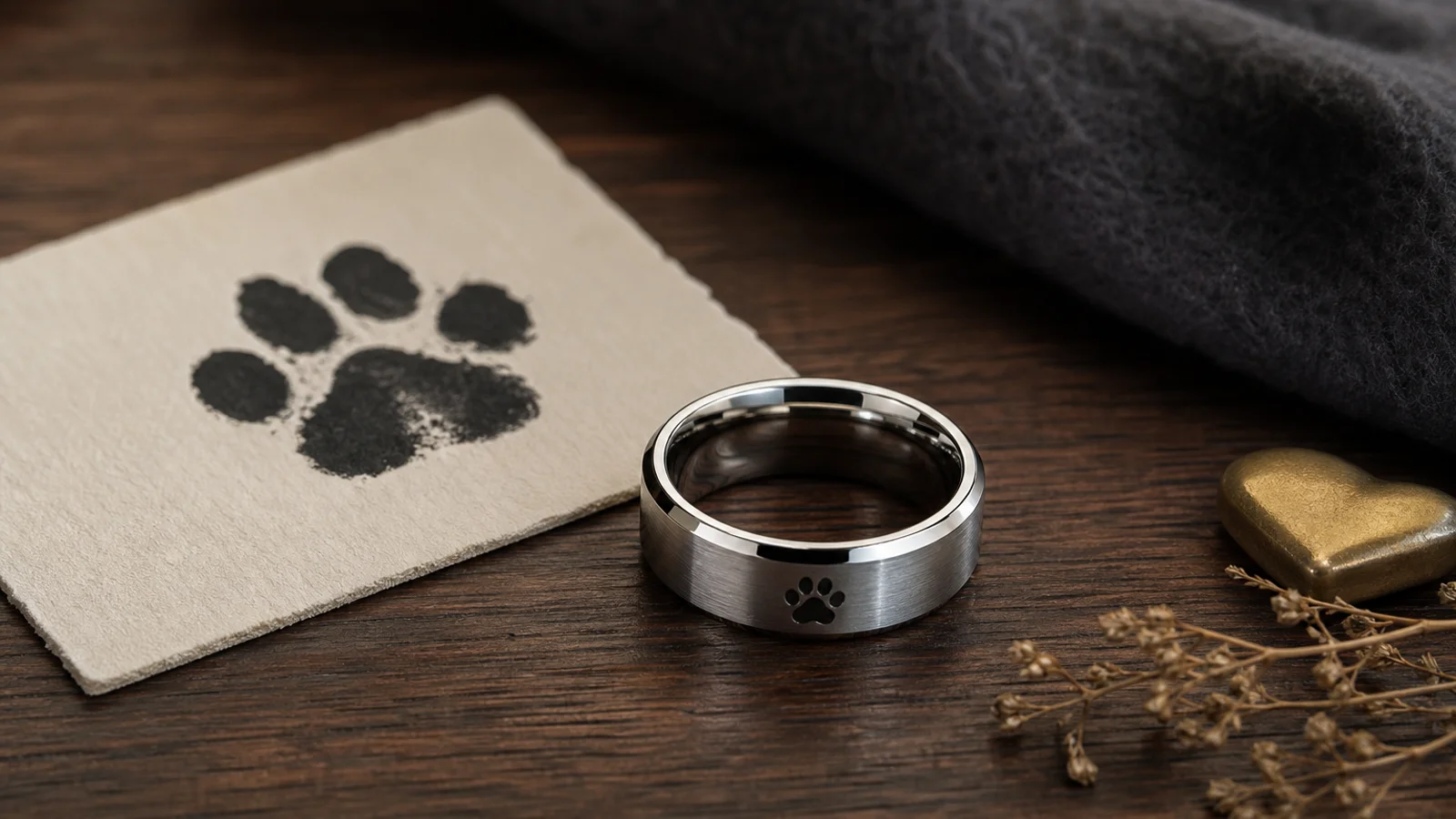
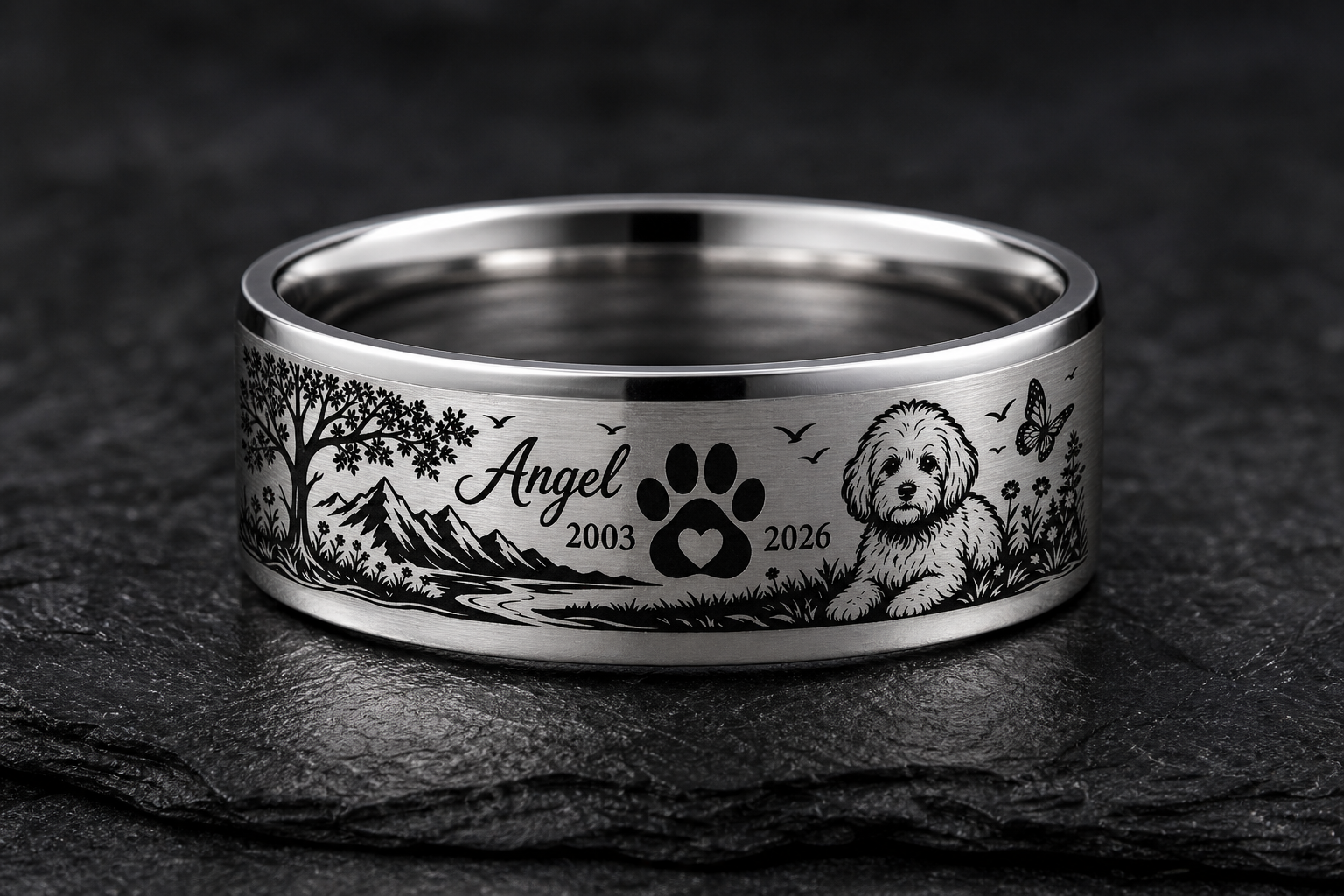
A dog pawn-print ring can feel deeply specific only when the source is specific enough to identify that individual dog at a glance.
Start with one clear photo source: vet print, clay print, ink transfer, or a high-quality image with straight lighting. Multiple blurred backups do not become one strong source.
The outer line quality in the print is the first threshold. If the ball or pad edges melt together, simplify aggressively or restart with another source file before you go further.
Check ring distance early. If the mark is still legible in your reduced screen preview, it is usually strong enough to become an exterior ring mark later.
One important grief-aware point is this: the goal is not technical perfection, it is a mark that can be touched and still feel like your dog in a difficult moment.
For public-facing pieces, pair the paw with one short anchor like the dog's name and a year. For private wearers, keep the outside quiet and place the note inside.
Avoid adding multiple paws, toy outlines, and extra phrases in one pass. One source mark and one anchor gives the ring room to breathe.
If you are missing a good print, a collar tag outline can be a truthful temporary fallback instead of forcing a false print impression.
Before opening the designer, confirm: source choice, preferred side of placement, wording length, and whether the phrase should be inside or outside.
This checklist should end when the source is clear enough to say yes. Everything else is just editing.