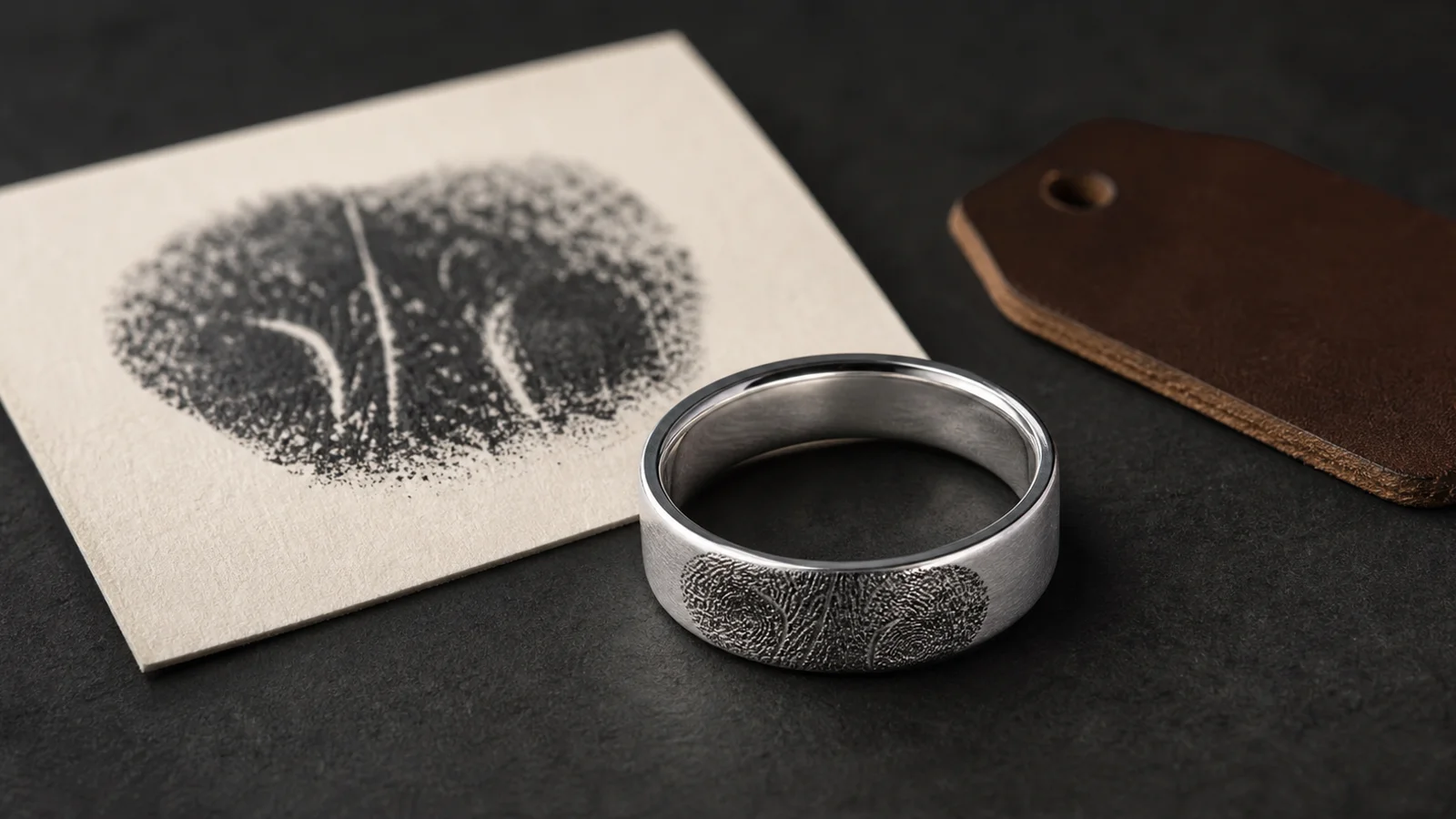
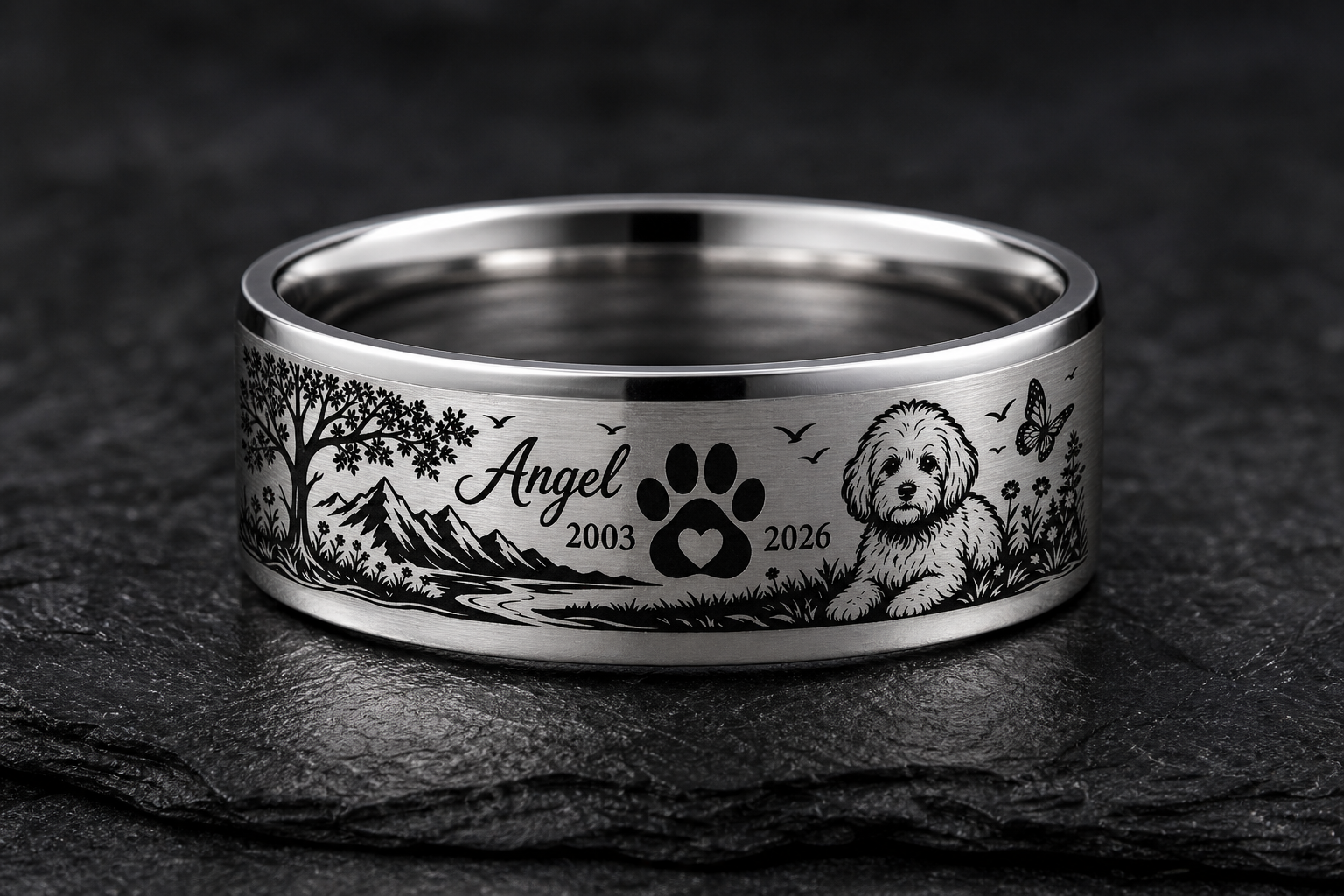
A nose print carries strong emotional context, but it can become visually noisy if used without preparation. The key is making a deliberate cut line from photo to engraving form.
Use the best single frame with direct natural light and minimal motion blur. Nose textures flatten fast when the source is soft or over-compressed by social media export.
After import into the design process, strip the photo down to the strongest region before adding text. You want one clear pattern, not a whole blurred patch.
One practical checkpoint is to ask: can I identify this as my dog after a moment of grief, from normal distance and emotional fatigue? If yes, the source is usable.
Keep words short. A ring with a nose motif and one name/date usually feels complete, while long memorial language can overwhelm the pattern.
Outside design should read quickly; inside can host one private phrase. This balance protects clarity and emotional privacy at the same time.
For walkers, runners, and people who wear rings every day, a lower-contrast pattern can be easier to live with than high-contrast detail that catches every edge visibly.
If the source remains unclear, do not force it. A collar tag silhouette, breed marker, or another photo-led approach can serve the same emotional goal.
Prepare both sides of placement before finalization: what the wearer sees daily, and what remains private for difficult days.
The right photo is less about technical perfection and more about whether the final ring still feels attached to the dog, not genericized by cleanup noise.