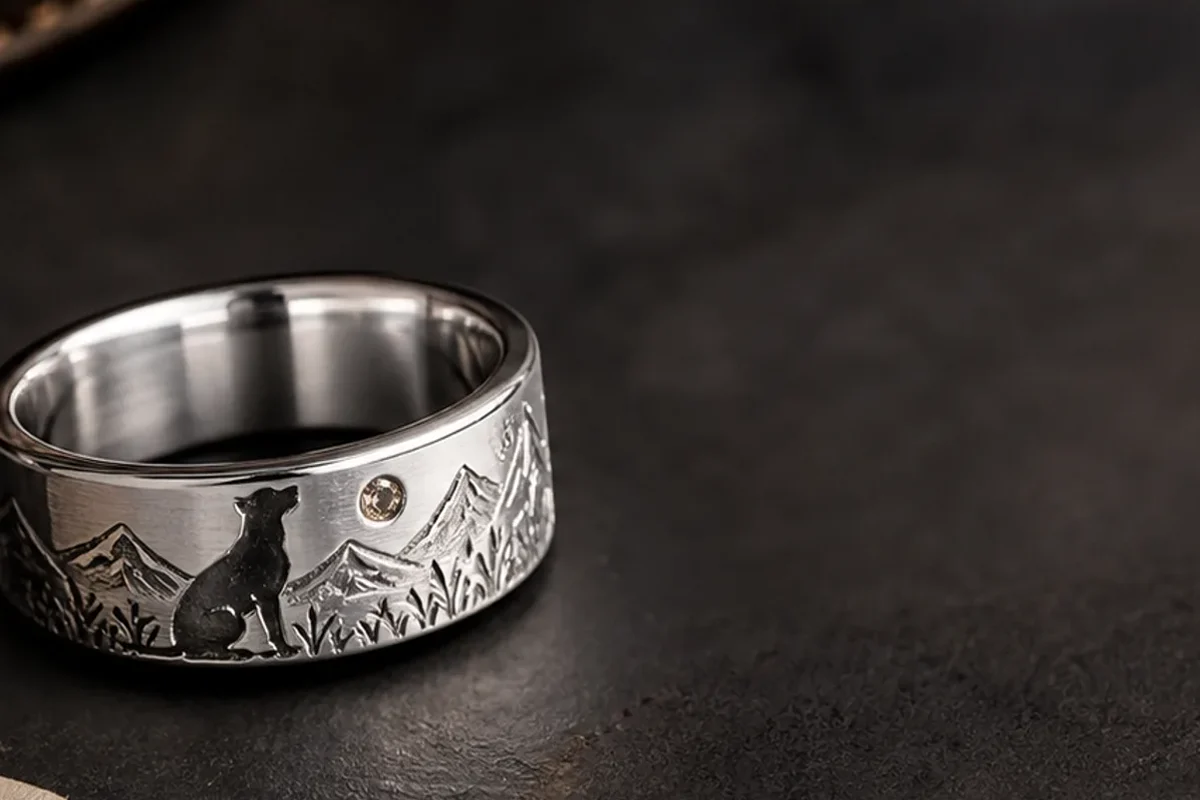
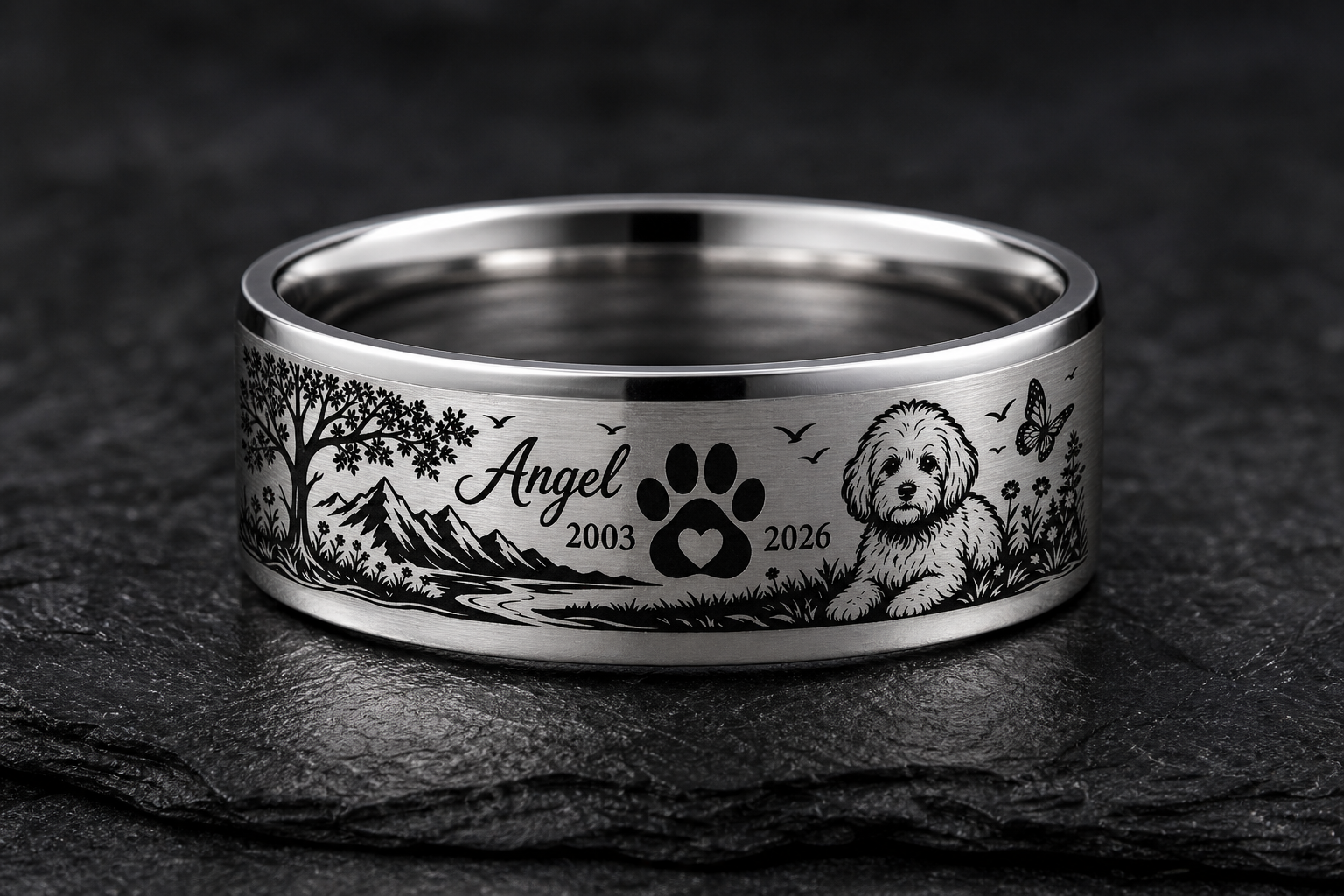
A dog memory ring is different from a generic pet symbol because it should point back to one dog and one part of life with that dog. The best design usually starts with a memory before it starts with a graphic.
Think about the detail you still notice: the porch spot, the trail, the collar sound, the couch corner, the greeting, the lake, the truck seat, or the nickname everyone used without thinking.
Once that memory is clear, choose the physical source that can represent it. That might be a paw print, collar tag outline, photo silhouette, nose print, place name, date, or a very short phrase.
Do not make the ring prove every memory at once. One habit or place can carry more feeling than a collection of pet icons, especially once the ring is worn every day.
If the memory is visual, put the source outside and keep the words inside. If the memory is a phrase, let the phrase lead and use only one small support mark.
Useful wording often sounds ordinary: Porch Buddy, Lake Girl, Ride Along, My Shadow, Good Boy, Still Home, or a name plus year. Household language is usually stronger than formal memorial copy.
When the ring is meant as a gift, choose a memory the recipient already tells, not one that needs explanation. A familiar story makes the ring feel comforting instead of puzzling.
A silver or brushed finish helps the keepsake stay quiet enough for daily wear. High contrast can help if the source is a print, but too many dark details can make the ring feel heavy.
The final test is whether the ring still makes sense without a full story attached. If the wearer can touch it and know exactly what it means, the design is doing its job.
Bring the dog's name, one lived memory, the best source image, date preference, and one phrase option into the Friends of Irony designer.