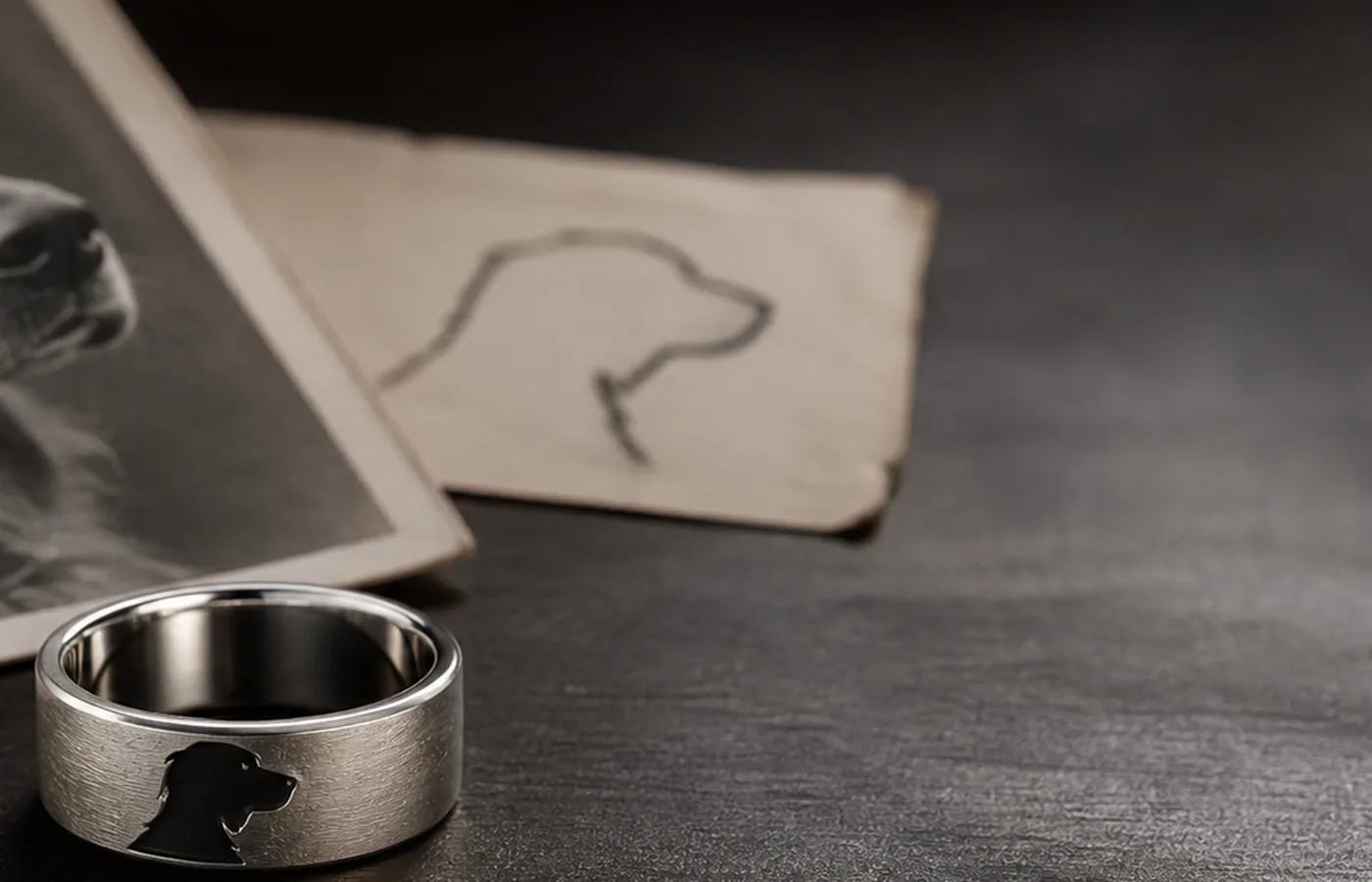
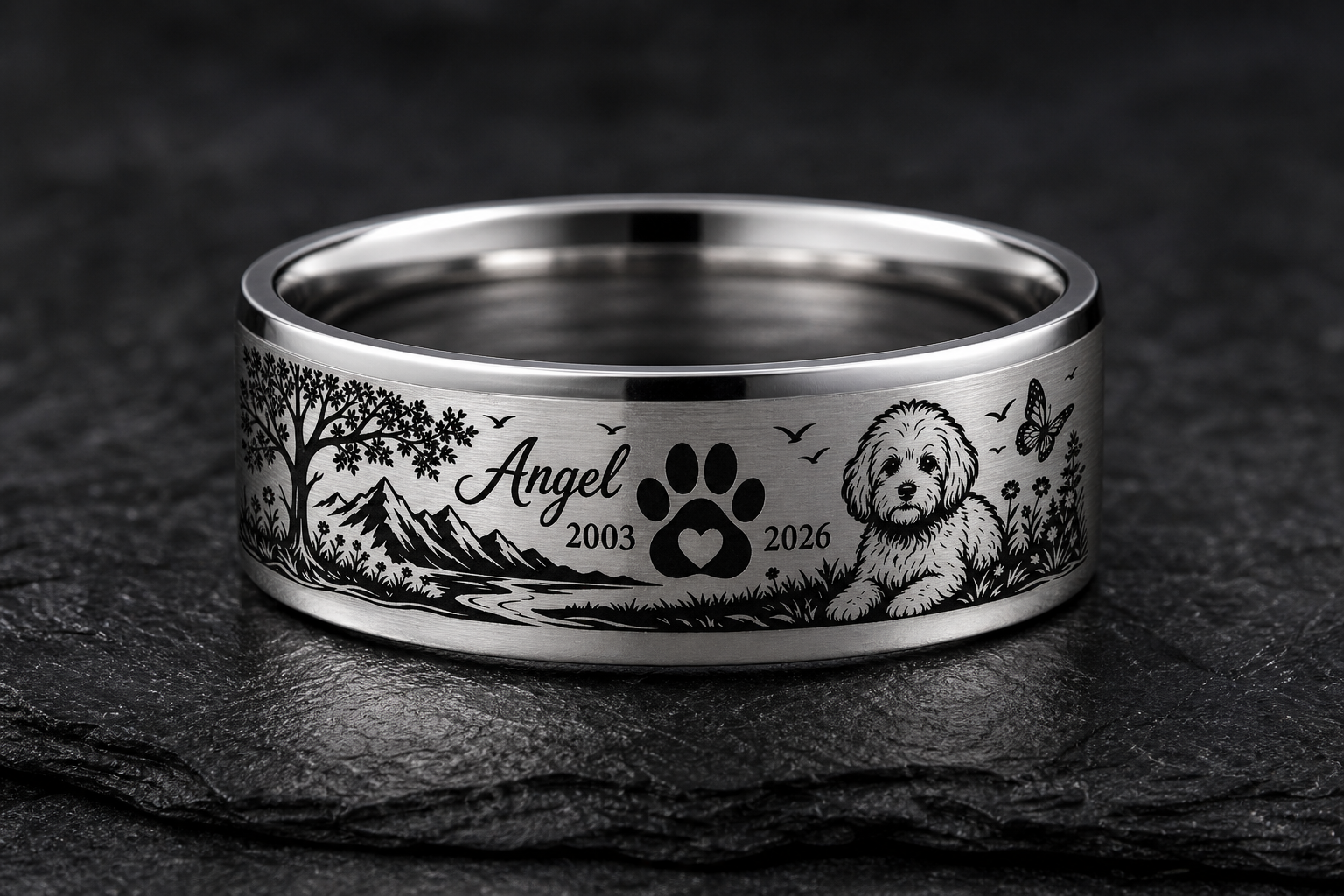
A dog memorial ring with both a photo and paw print can work, but only if the design has a hierarchy. The ring cannot give a portrait, a paw, a name, dates, and a long phrase equal space.
Decide first which source feels more like your dog. Some families recognize the paw instantly; others need the ear shape, head tilt, or profile from a favorite photo.
A photo usually needs to become a silhouette or simplified portrait outline before engraving. Fine fur detail, eyes, and facial texture rarely survive at ring scale without becoming muddy.
A paw print is often stronger as a clean outside mark because the pad shapes remain recognizable when simplified. It can carry the whole design if the print is crisp.
If the photo leads outside, the paw can move inside as a small mark or be referenced in the story note. If the paw leads outside, the photo can guide a small breed silhouette or be omitted.
Names and dates should stay short when two source types are involved. The more personal material you use, the less supporting text the ring needs.
Use the highest-quality original files you can find. A screenshot of a photo and a blurry paw scan make the designer solve avoidable problems before the design even begins.
Avoid placing a full portrait beside a full paw print on the same narrow outside panel. The result may look complete on a screen and still fail as readable jewelry.
The key decision is simple: which detail would you want to notice first when you look down at your hand? That answer should become the outside engraving.
Bring the chosen lead image, the secondary source if needed, the dog's name, and dates into the Friends of Irony designer with a note about which detail should dominate.