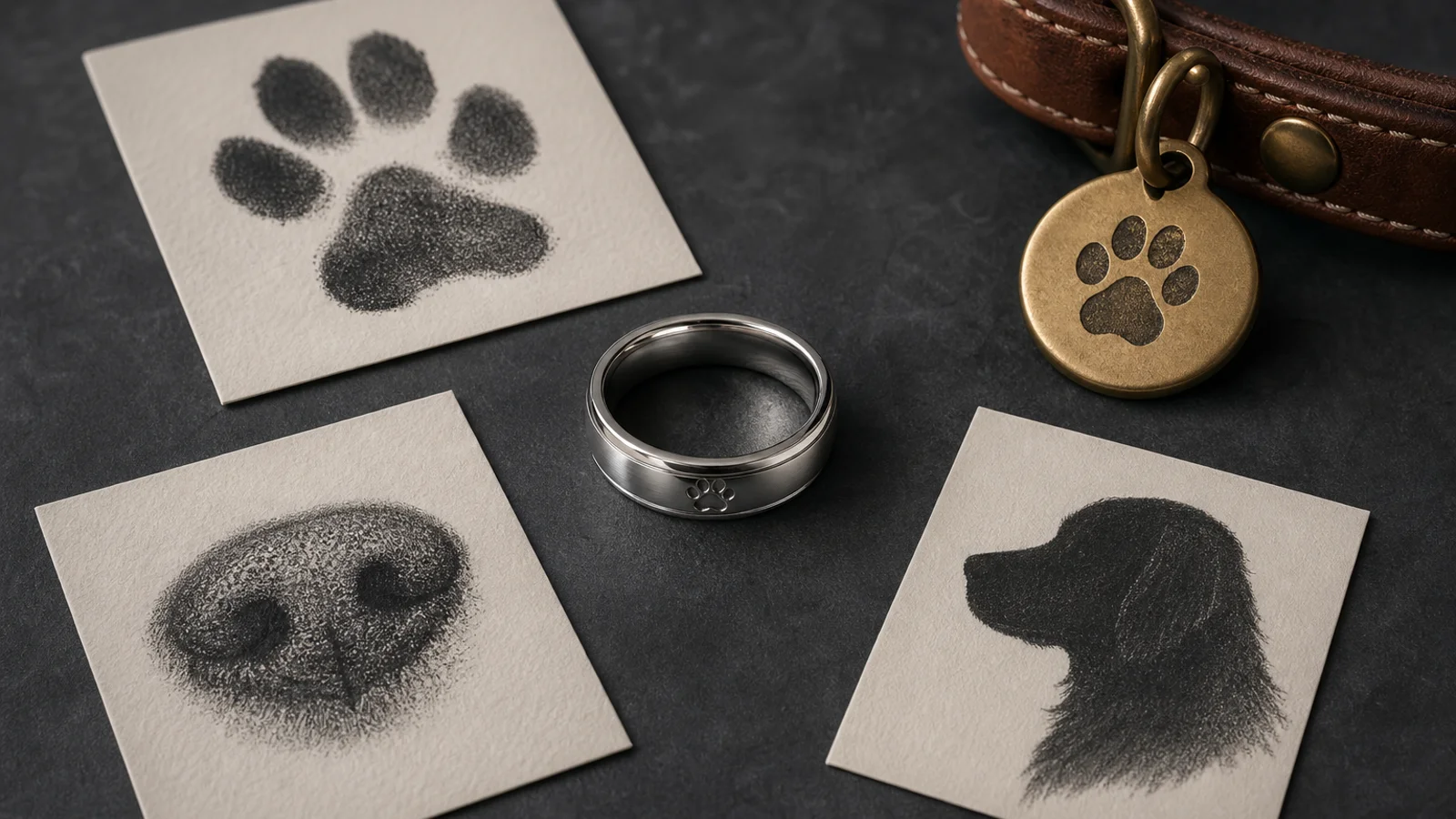
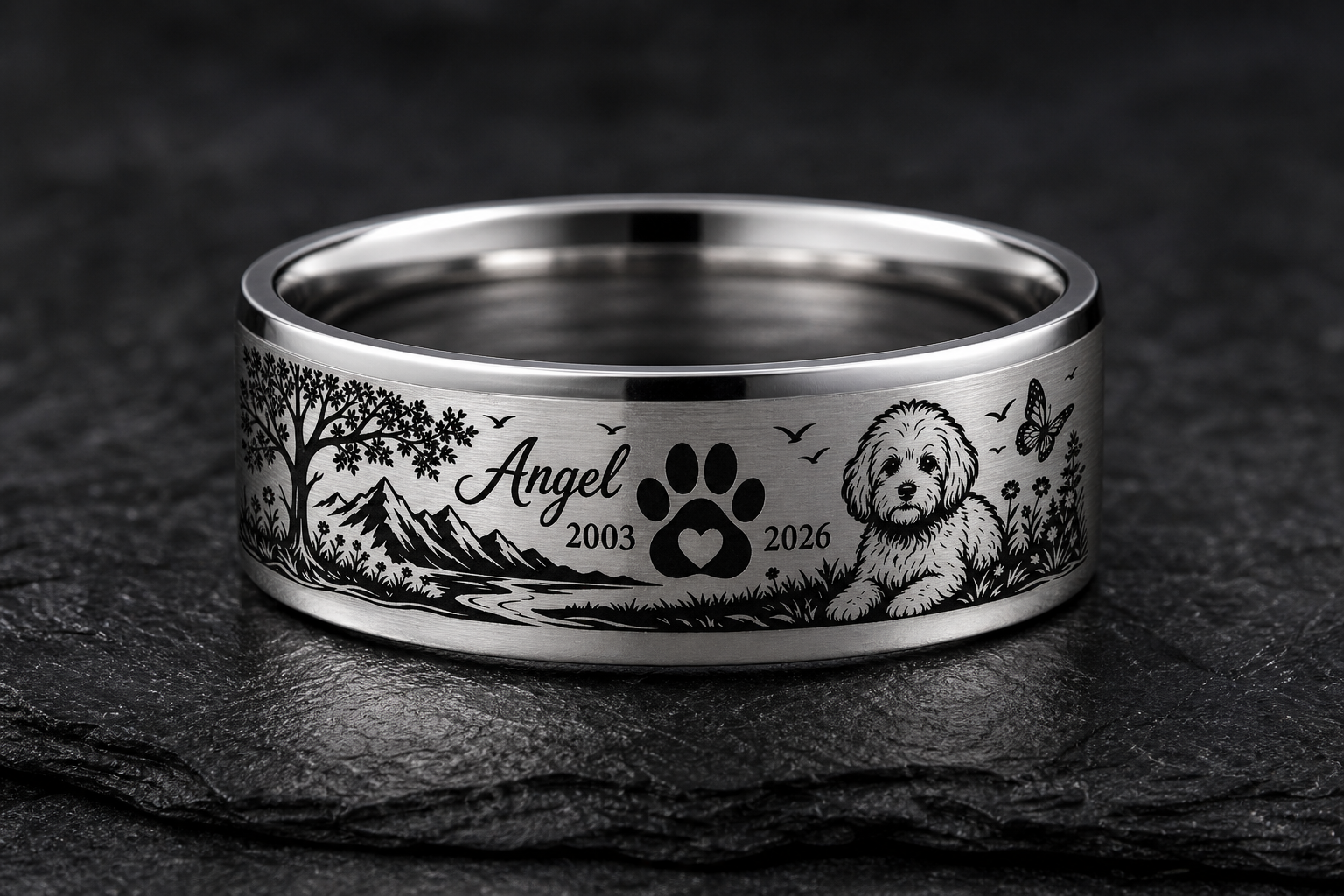
Ashes-based commemorations carry a lot of weight, and one of the first mistakes is to overbuild the ring with symbolism. Most of the emotional power already exists in one meaningful source and one honest phrase.
When the keyword goal is strong, the content should remain practical. Start with one photo that meaningfully represents the dog, and keep all text in short form.
If you do not want a literal pet image on the ring, a name and one date can stand in as a dignified alternative while staying specific to the same memory.
Choose a finish after deciding where the ring will be seen. Polished bright surfaces can sharpen some lines; brushed surfaces can soften and preserve texture over time.
For many grievers, photo references are difficult because they are emotionally charged. Keep the file brief: one photo direction, one source note, one design decision for placement.
Before moving forward, validate that the ring can still be understood if looked at quickly in daily life. A memorial ring must work under stress, not just in a screenshot.
Use one short anchor phrase and avoid ceremonial language that may be too formal to feel lived-in.
If grief makes your hand shake while choosing, simplify the design constraints: fewer details, stronger source, clearer placement. Emotional load should not produce visual clutter.
The private line inside can carry the hardest language if needed. Outside should carry the symbol and date so the ring remains readable over time.
A good end state is a ring that honors your dog without pretending the ring itself can hold every part of your grief.