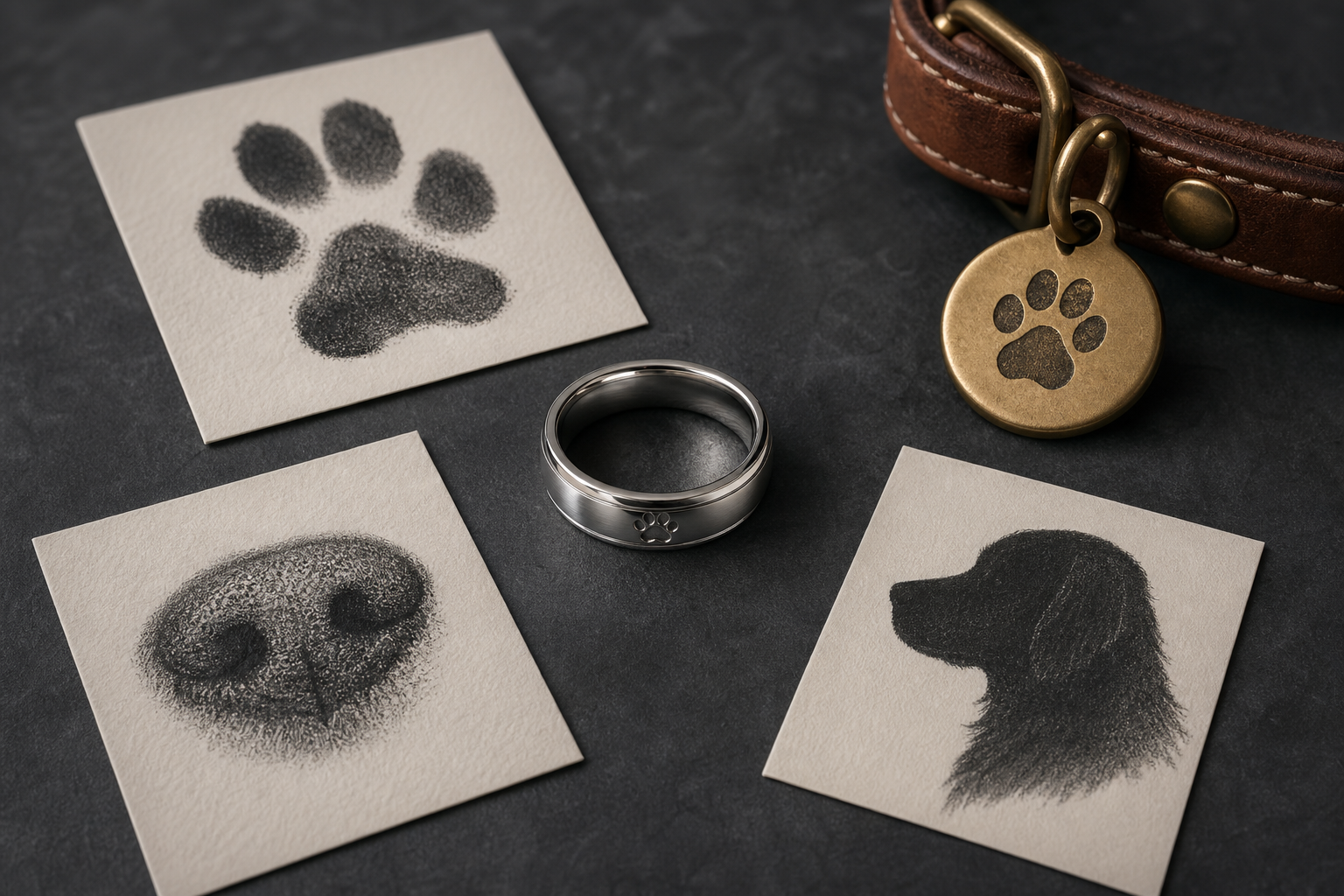
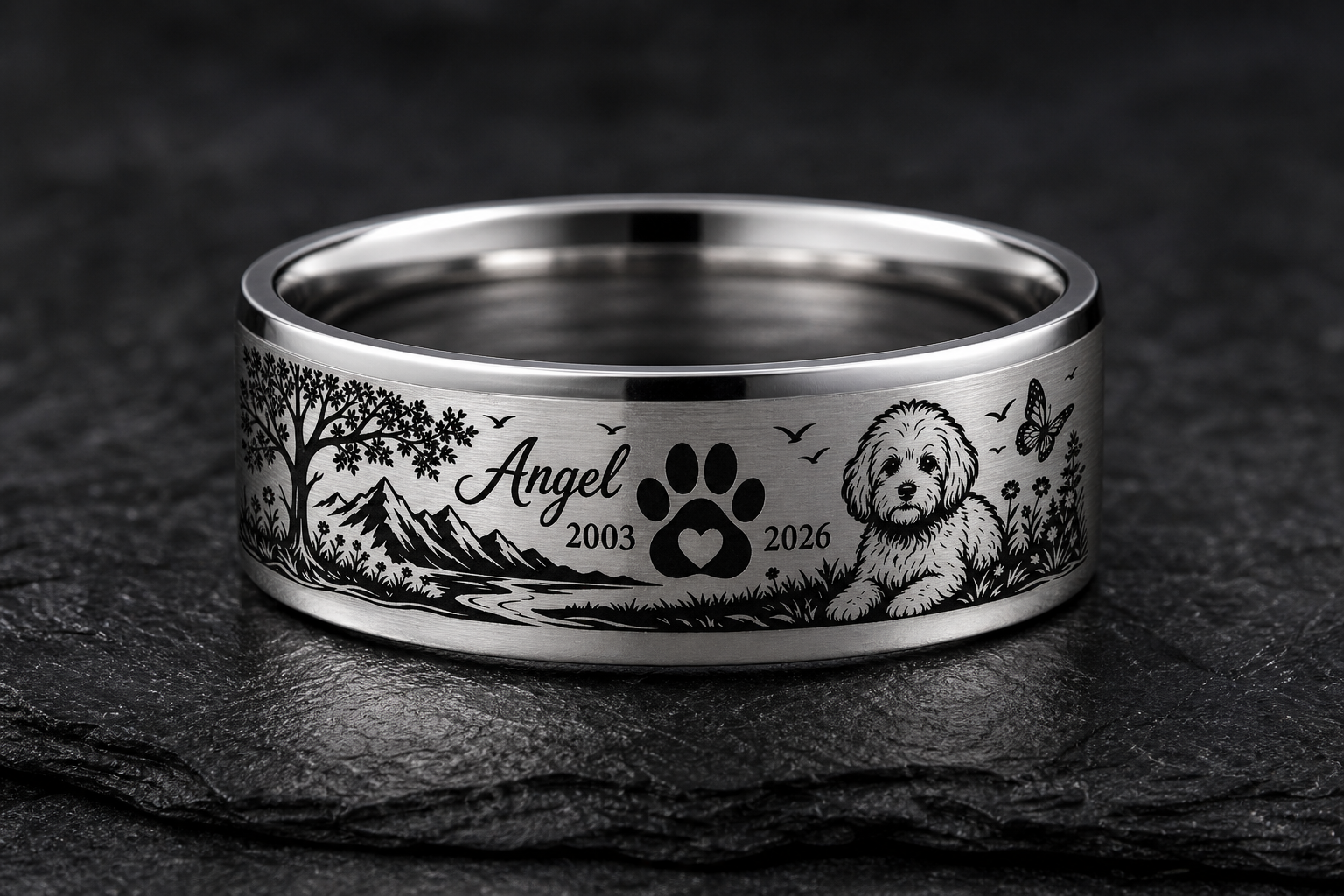
Treat a symbolic source such as a paw print, nose print, photo, collar tag, or nickname as the ring's one job. Every other choice, from finish to placement, should make that detail easier to read, not harder.
Paw prints, nose prints, silhouettes, names, adoption dates, "Run Free," or a trail memory can each work well on their own. Trouble starts when two or three of them compete for the same space on the band.
outside space can hold the symbolic mark, while the inside keeps the date or private phrase. That decision should come before font, symbol, or finish choices, not after.
a simple silver or brushed band can feel respectful without making the ring look like an urn alternative. Match the finish to the engraving depth and contrast the design actually needs.
use language that remembers the bond rather than explaining what the ring does not contain. Read it out loud before finalizing; wording that sounds right out loud usually reads right on metal.
collect the best non-ashes source: print, photo, tag, or handwriting from a card. Prepare this before opening the designer so the session moves quickly.
choose one symbolic detail instead of combining every keepsake at once. A ring with one clear center of meaning almost always outperforms one with several.
The most common issue is do not make the design about ashes if the emotional detail is really the dogs name or print. Catching it before ordering saves a redo later.
The question worth answering early is what which object or mark feels closest to the dogs presence. It shapes everything that comes after.
From there, bring the selected print, photo, tag, name, and memory note into the Friends of Irony designer.