Rescue dog loss carries something specific that other pet loss does not always reach: the awareness that the dog's entire life after arrival was a second chance. Every good year, every walk, every ordinary night on the couch was something the dog might not have had. When that life ends, the grief is layered with gratitude, and a ring can hold both.
The adoption date is often the most emotionally significant date in a rescue dog's record. It marks when the relationship started, when the dog arrived, when the house changed. Many rescue dog owners choose the adoption date over the birth date for exactly this reason: the dog's life before that date is unknown or painful, and the life that followed is what the ring is for.
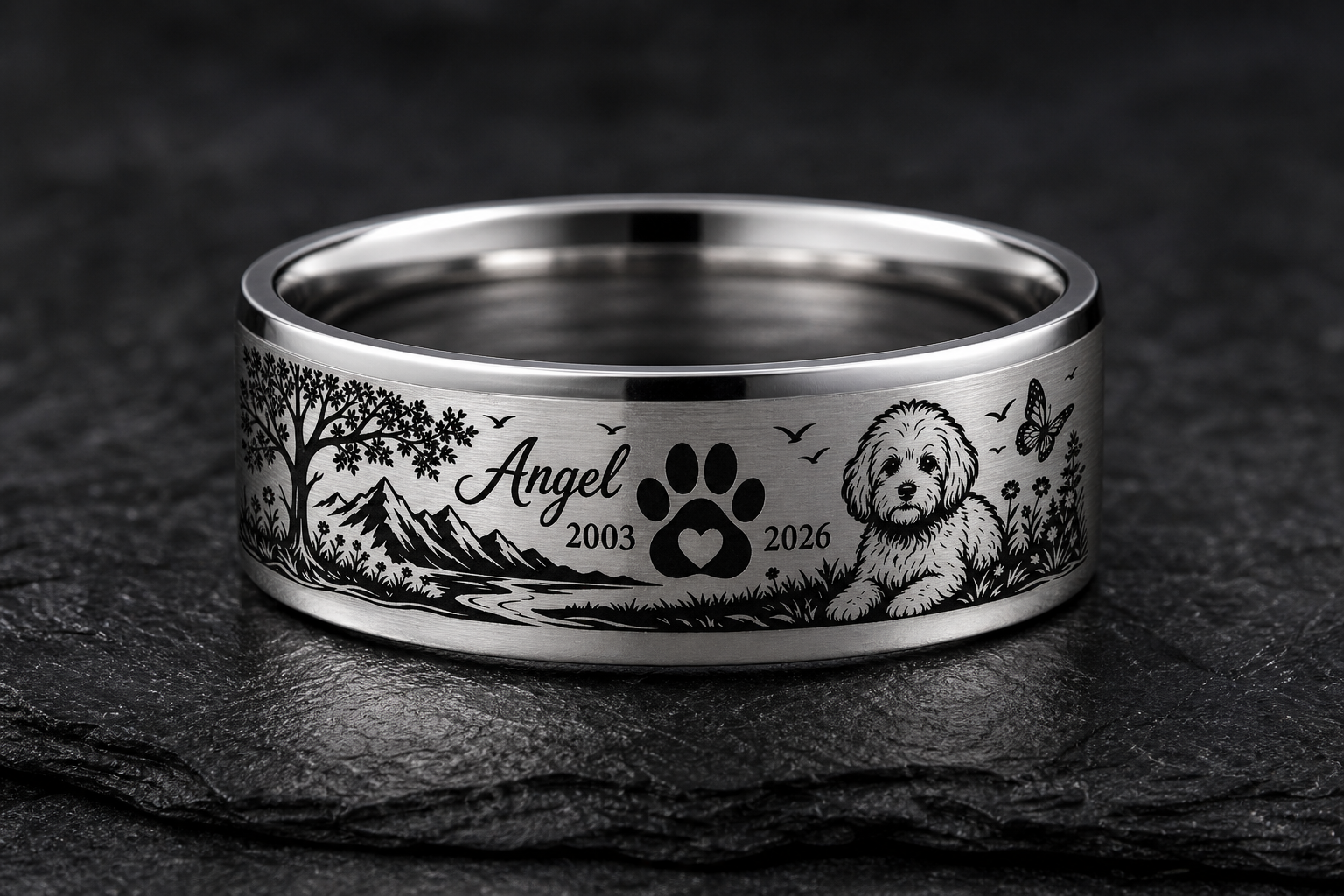
The name the family gave the dog matters here more than in most memorial ring contexts. Rescue dogs are often renamed when they arrive; the name the family gave them is itself an act of beginning. Using that name, without a shelter name or a prior name, is a design decision that belongs to the relationship.
If the dog came from a specific rescue organization, a foster family, or a specific place and the connection to that origin matters to the wearer, a small location reference, a city initial, or a private detail about where the dog was found can sit inside the band as a quiet note about the beginning of the story.
Many rescue dogs came with visible evidence of their past: a missing leg, a scarred ear, a particular wariness that faded over years. Those physical realities sometimes become part of the tribute. A silhouette that shows the dog as they actually were, the three-legged stance or the specific ear set after an injury, is a more personal mark than a generic breed outline.
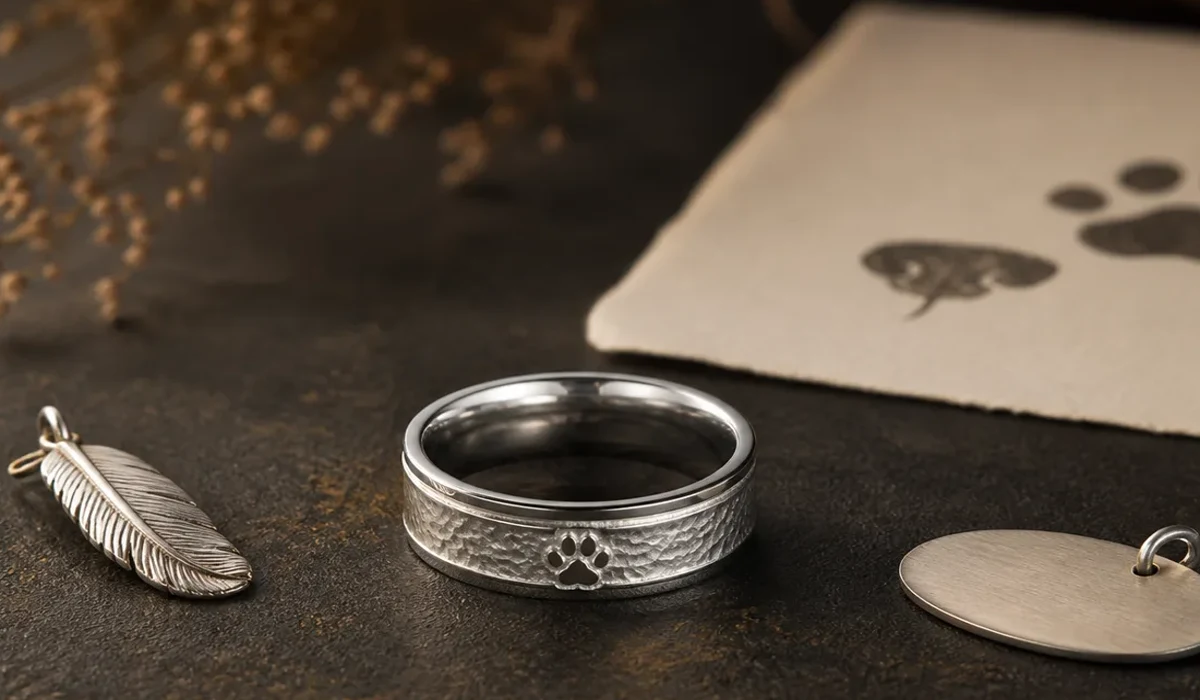
A paw print from a rescue dog carries the same emotional weight as any other print and often more specificity, because prints were not always taken at birth and the ones taken in the family's years with the dog are all that exists. A vet card, an ink kit session, or a clear close-up photograph from the years the dog was home are all usable sources.
The phrase the family used with the dog during the rescue years can anchor the wording. 'Good boy, we found you' or 'You were always ours' or simply the dog's name and the date the family said it for the first time carry a different weight than standard memorial phrasing. Use the words that belonged to the actual relationship.
Rescue dog memorial rings are sometimes ordered for a foster family rather than an adopting family. A foster who cared for a dog for months before the dog went to its final home may carry a specific kind of grief, the loss of a dog who was never officially theirs but who lived in their house, slept in their bed, and changed their daily life. That relationship deserves a ring too, and the design should reflect it accurately.
Width and finish direction for a rescue dog ring should follow the same practical logic as any other pet memorial: choose for the hands it will live on, the life it will be worn through, and the other jewelry it will sit beside. The source and wording can carry the rescue story; the band style should stay practical.
When the adoption date, the dog's name, the best paw print or photo, and the phrase that still sounds like the relationship are gathered, bring them into the Friends of Irony designer with a short note about where the dog came from and what the years together felt like.