The rainbow bridge poem has been part of pet loss culture for decades, and for many people it is the first language that named exactly how the loss felt. A memorial ring that uses this language is not a generic pet jewelry piece; it is a specific personal statement about where the wearer believes their dog went.
The most useful form of the phrase on a ring is the shortest version. 'Run free at the bridge' or 'Wait for me at the bridge' gives the idea room. 'At the rainbow bridge' needs no other words beside the dog's name. The bridge is a complete image on its own; it does not need to be decorated.
Rainbow imagery on a ring is harder than rainbow wording. Color gradients are not available in standard engraving; a geometric bridge arc, a simple horizon line, or a small crossing shape can suggest the idea in linework without trying to illustrate the poem literally. Most families choose the phrase and skip the symbol.
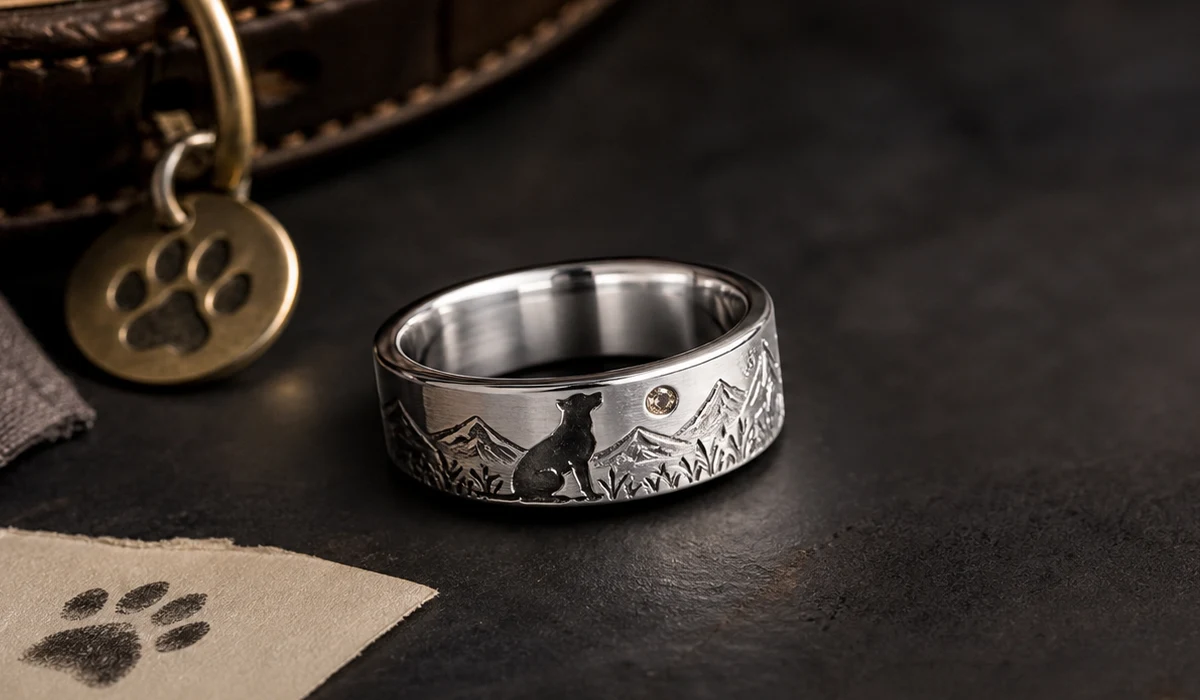
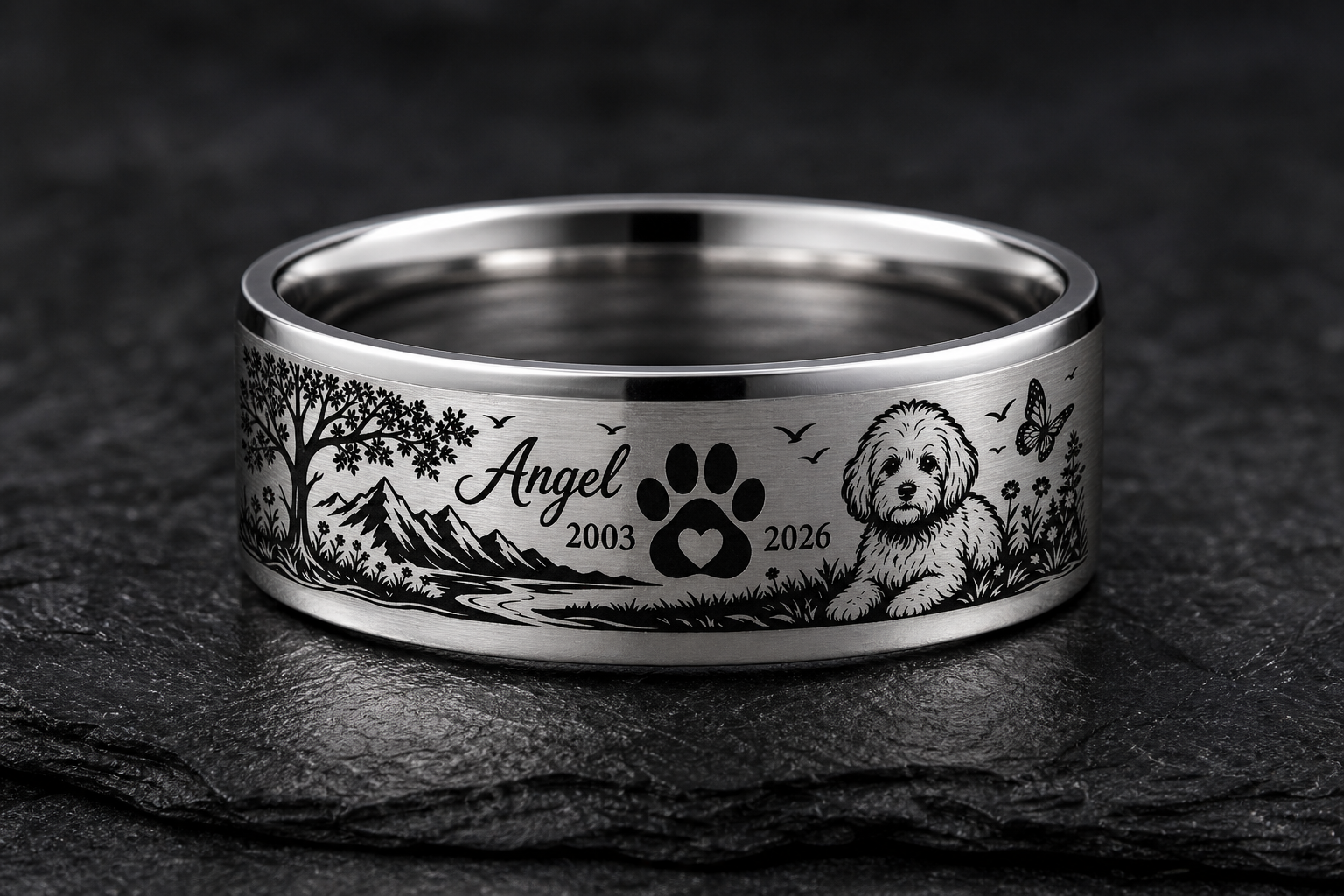
A paw print remains the strongest visual companion for rainbow bridge wording because it belongs to the specific dog rather than to a general idea. One paw on the outside and the bridge phrase inside keeps the ring personal and the metaphor private where it belongs.
The dog's name and years together anchor the ring in a specific life rather than a general idea about loss. 'Sadie 2012–2025, wait for me at the bridge' is a complete tribute with one name, one span of years, and one sentence. Nothing else is required.
If the family discovered the rainbow bridge poem together, or if the dog passed in a way that made the poem particularly meaningful, a more visible outside placement can work. The phrase on the outside of the band, with the dog's name and dates inside, is a readable design that does not require explanation to anyone who knows the tradition.
A silhouette of the dog running, moving away, or in a peaceful stance pairs naturally with rainbow bridge language because the image and the phrase tell the same story. A standing or resting pose can feel too still for a phrase about crossing over; a running silhouette carries the energy of reunion that the poem's ending holds.
The collar tag or the dog's print underneath rainbow bridge text creates a layered tribute: the physical mark of who the dog actually was, held alongside the idea of where they went. That combination is more personal than rainbow bridge imagery alone.
Many people find that rainbow bridge language helps most in the early months and shifts over time. A ring that keeps the phrase private, inside the band rather than outside, allows the wearer to hold onto that comfort without the phrase defining how they show up in daily life after the grief has changed shape.
When the phrase, the dog's name, and any source print or image are settled, bring them into the Friends of Irony designer with a note about whether the bridge language should be visible or private.