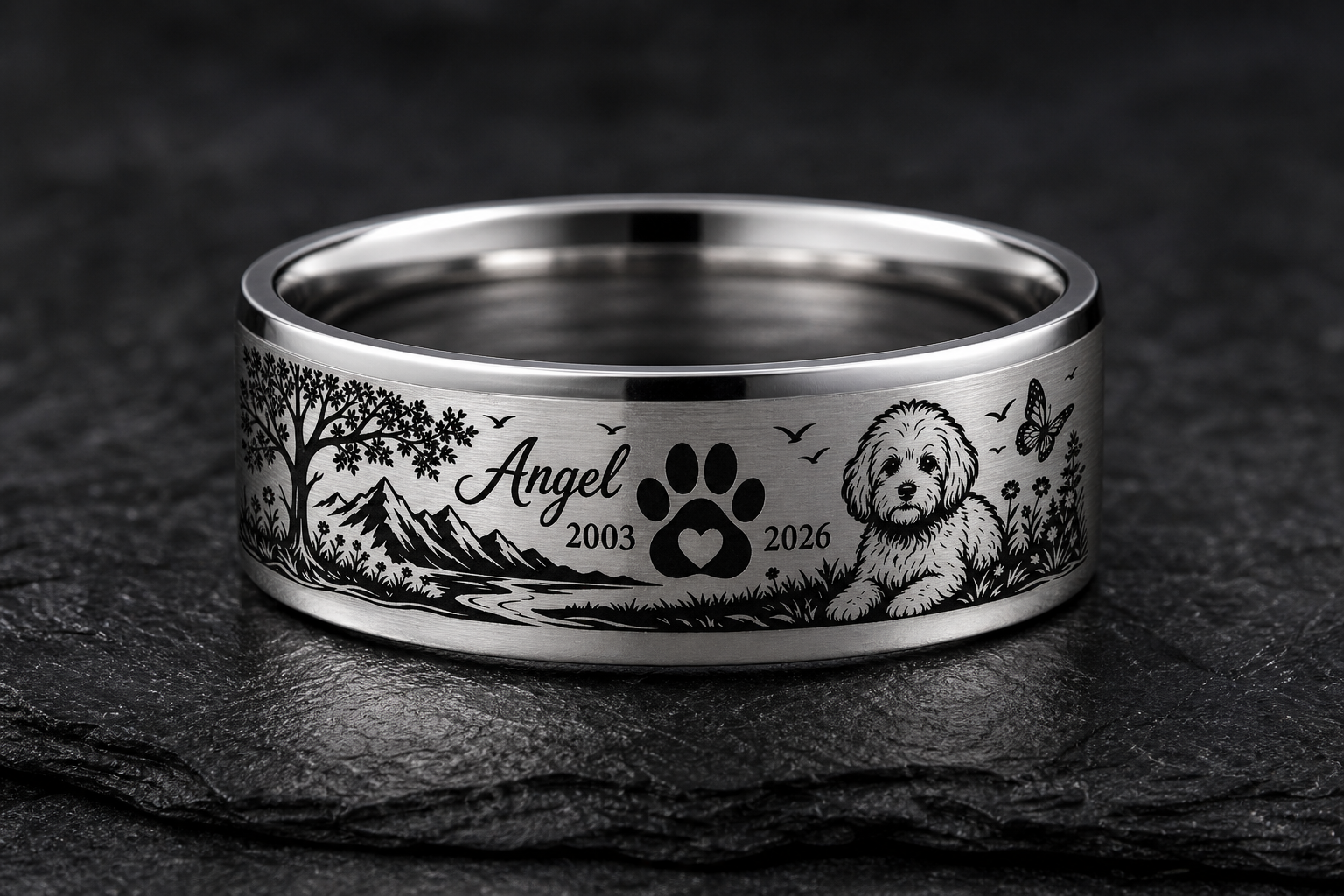
A hunting dog is both companion and partner, and the loss that follows carries both weights. The grief is personal in the way all dog loss is personal, and it is also the end of a working relationship built over seasons. A memorial ring can carry both without having to choose between them.
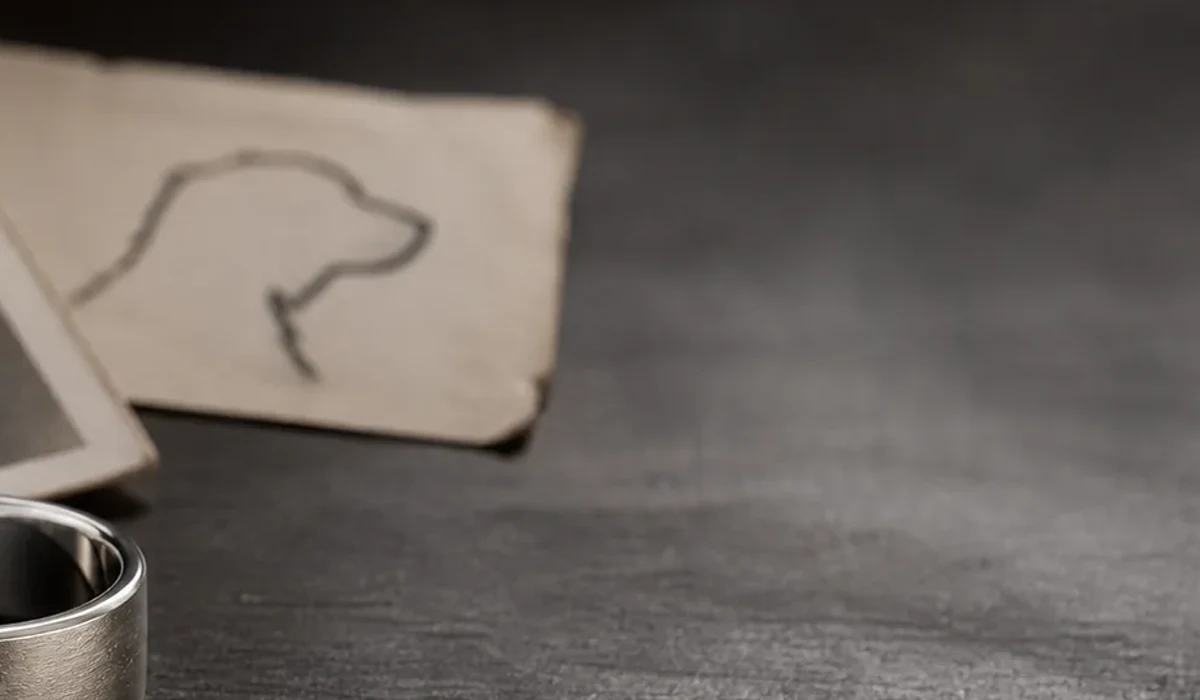
The breed silhouette is usually the strongest visual starting point for a hunting dog ring, because the body shape of a bird dog on point, a retriever at water, a hound in stride, or a flusher in cover is immediately specific to anyone who worked with that kind of dog. Breed silhouettes read as belonging to a particular dog far more than a generic paw print does.
The dog's name and the season range together make a natural design structure. A name and years reads as memorial; a name and the number of seasons worked, or the specific first and last seasons, reads as tribute to the work. Many hunting dog owners find the season count more accurate to the relationship than a standard year range.
If a paw print exists, it can stand as the central mark. Hunting dogs often have larger, more deliberate pad prints, and a clean ink impression from a field vest or hunting journal engraves with more presence than a studio print. The print from the last hunt, if documented, carries everything else.
Species marks can work as supporting details when kept small and simplified. A single bird outline, a duck wing, a pheasant tail, or an upland grass tuft beside the dog's name references the work without crowding the design. Keep the species mark as an accent, not the central image.
Darker finishes and wider bands tend to match hunting dog memorial rings better than polished silver. A matte black, dark tungsten-style finish, or a heavily brushed silver band feels closer to field gear and to how the working relationship actually looked. This is not a delicate jewelry piece; it is a tribute to a working partnership.
The dog's role within the hunt can shape the design. A flushing dog worked differently from a pointing dog or a retriever. The stance in the silhouette, the supporting mark from the work, and even the wording can reflect whether the dog was a close-cover flusher, a ranging pointer, or a water retriever. Those are real distinctions that mean something to the person who worked the dog.
If there is a specific season, a specific location, or a specific trip the two of you made every year, coordinates or a simple place name can sit inside the band as a private reference to that chapter. A duck blind address or a mountain name reads as private tribute without anyone outside the hunt needing to understand it.
Width and comfort matter for a ring that will be worn while field dressing, glassing a ridge, or doing the morning work of an active outdoor life. A band that catches on gloves or creates an impractical friction point in the field will not be worn, and a memorial ring not worn does not carry anything. Choose width and finish for the hands the wearer actually works with.
When the breed, the dog's name, the season record, and the strongest source print or photo are clear, bring them into the Friends of Irony designer with a note about the working dog's role and the field context the ring should carry.