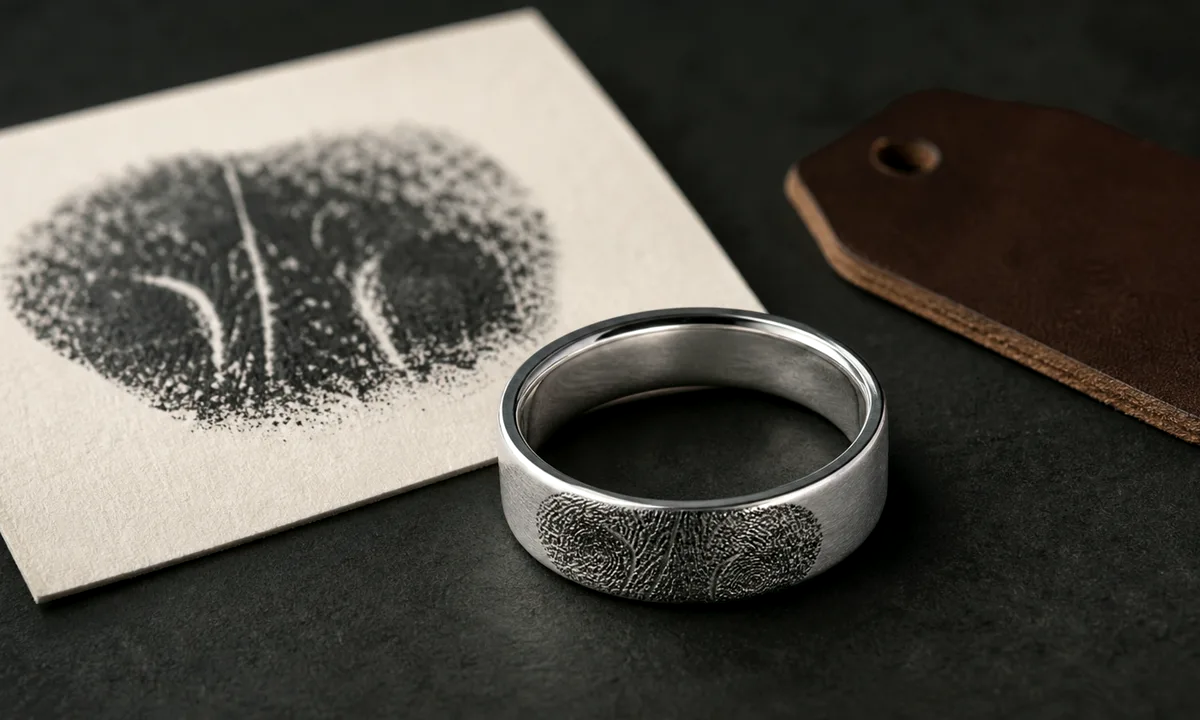
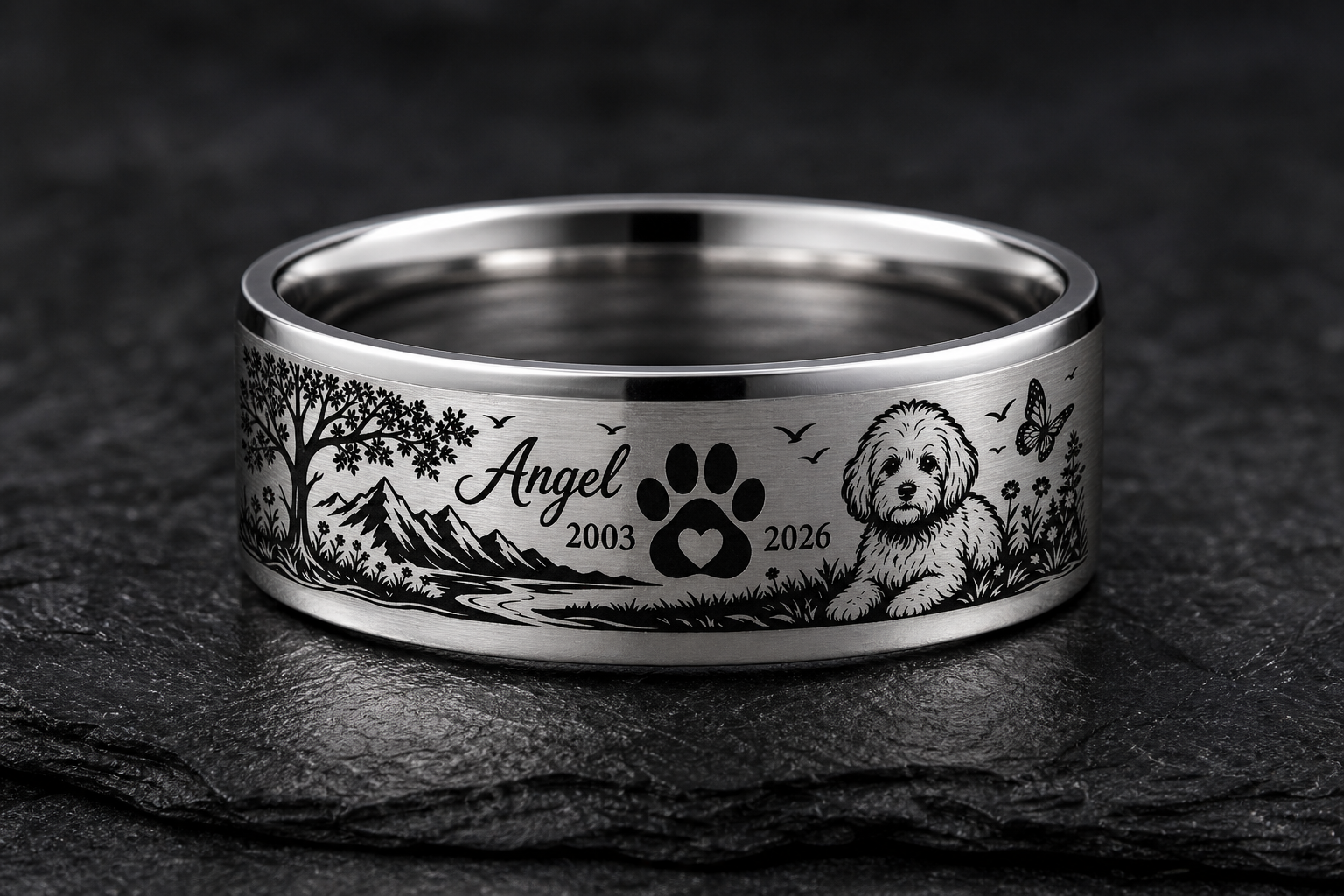
A dog nose print memorial ring can feel more intimate than a generic pet symbol because the mark came from the dog directly. That only works when the design protects the pattern instead of burying it under extra details.
Start with the clearest source available. A vet keepsake card, an ink print, a clay impression photographed straight on, or a high-resolution photo can all work if the main nose texture is visible.
Do not try to preserve every pore, shadow, and edge. The goal is a clean engraving interpretation that still feels attached to the dog, not a literal copy of every mark in the source file.
A nose print usually needs more visual space than a name. If it is the outside feature, keep the name, date, or phrase short and move private wording inside the band.
Check whether the source still reads at thumbnail size. If it becomes a dark smudge on screen, it will probably struggle on metal unless the pattern is simplified aggressively.
For dogs with distinctive noses, a partial crop can be stronger than a full oval. Use the section that carries the clearest texture and most recognizable shape.
Avoid pairing a full nose print with a full paw print, portrait, collar tag, and long phrase on the same outside panel. That may look complete in a mockup but can fail as daily jewelry.
A quiet brushed finish can make the ring easier to wear every day, while darker grooves can help the nose texture stay visible. Choose finish after deciding how public the design should feel.
If the nose source is weak, use a collar tag, silhouette, or name-led design instead of pretending the print is clearer than it is. A truthful source is kinder than a forced one.
Bring the nose print source, dog's name, dates, and one sentence about the memory into the Friends of Irony designer with a note that the nose print should lead.