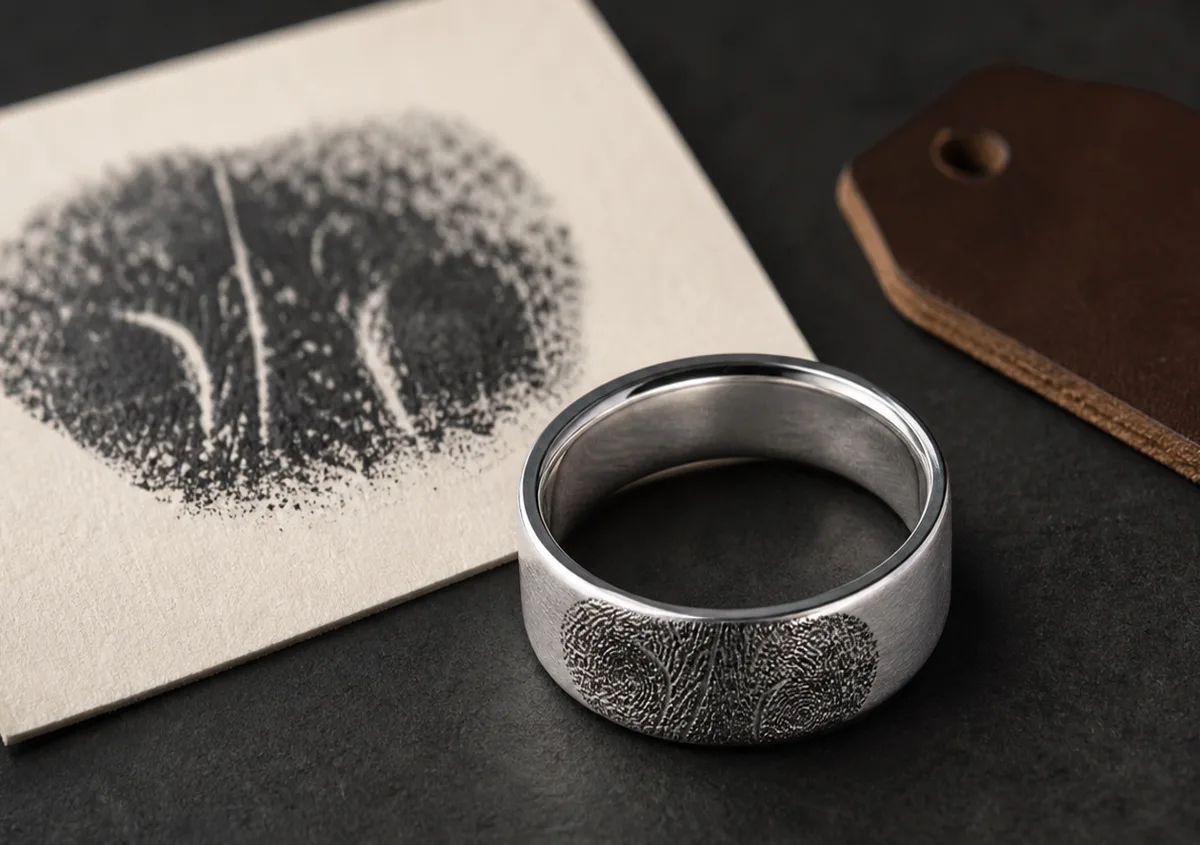
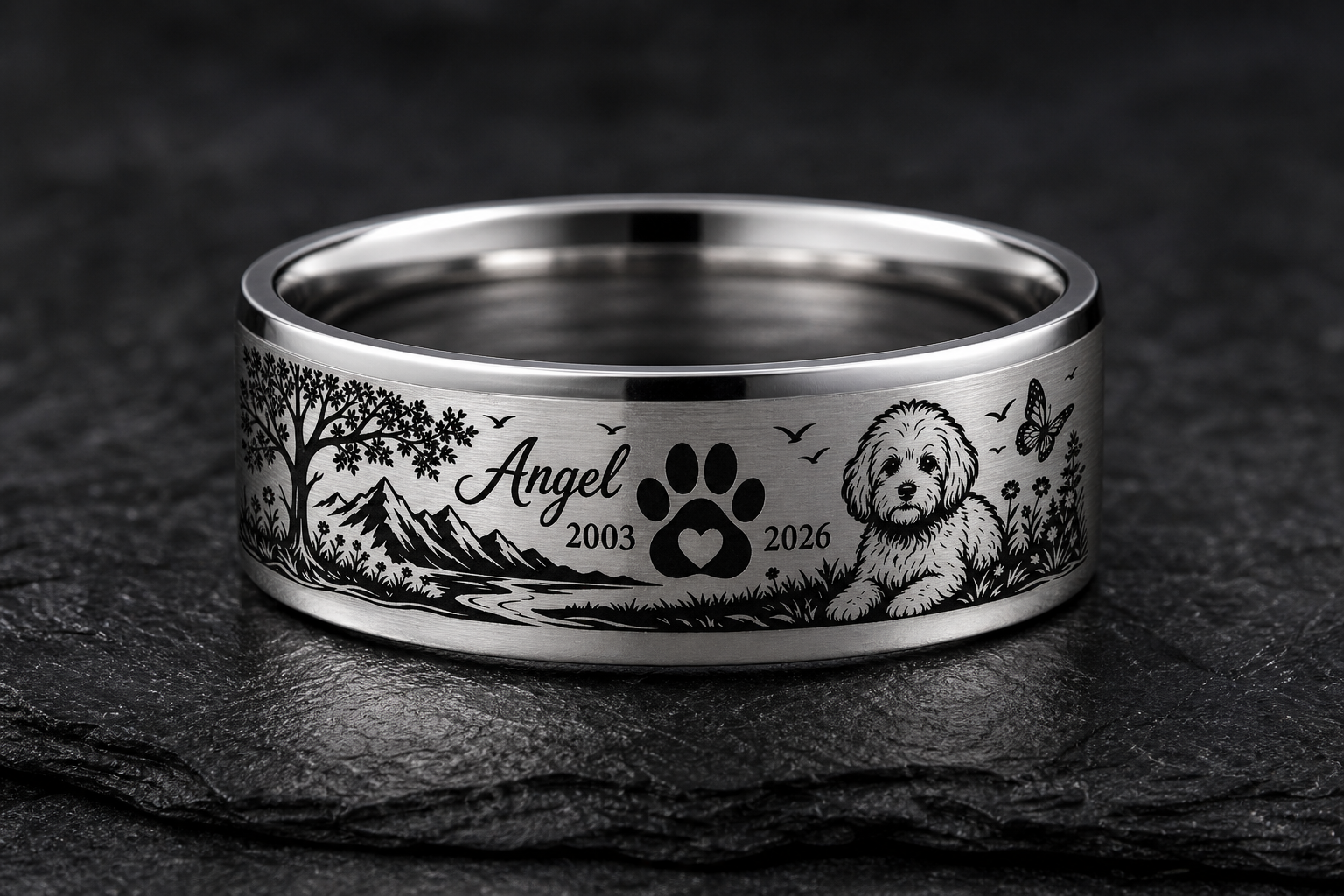
A dog nose print memorial ring can feel incredibly personal because the texture is specific to the companion, but the source has to be handled carefully.
Start with the clearest real source you have. A close photo, ink impression, clay reference, or vet-provided print can work if the nose pad shape and ridge direction remain visible.
Photograph in soft natural light and keep the camera square to the source. Angled photos stretch the texture and make the final engraving less faithful.
Do not worry if only one section is sharp. A strong partial crop can become a better memorial ring than a full nose image where every ridge is soft.
Before choosing wording, reduce the nose print on screen. If it still reads as a textured mark from a normal hand distance, it has a better chance of working outside the band.
Names and dates should be concise. A nose print already carries visual complexity, so supporting text should identify the dog without competing for attention.
Inside engraving is useful when the family wants a private promise alongside the visible nose mark. Outside engraving should stay focused on the source itself.
Avoid using a social media download if an original photo exists. Compression turns small nose details into digital noise that can look accidental once engraved.
If the nose source is not strong enough, switch to a collar tag, silhouette, or name-led design rather than forcing a texture that will not read clearly.
Bring the original nose print image, dog name, dates, and one note about whether the ring should feel visible or private into the Friends of Irony designer.