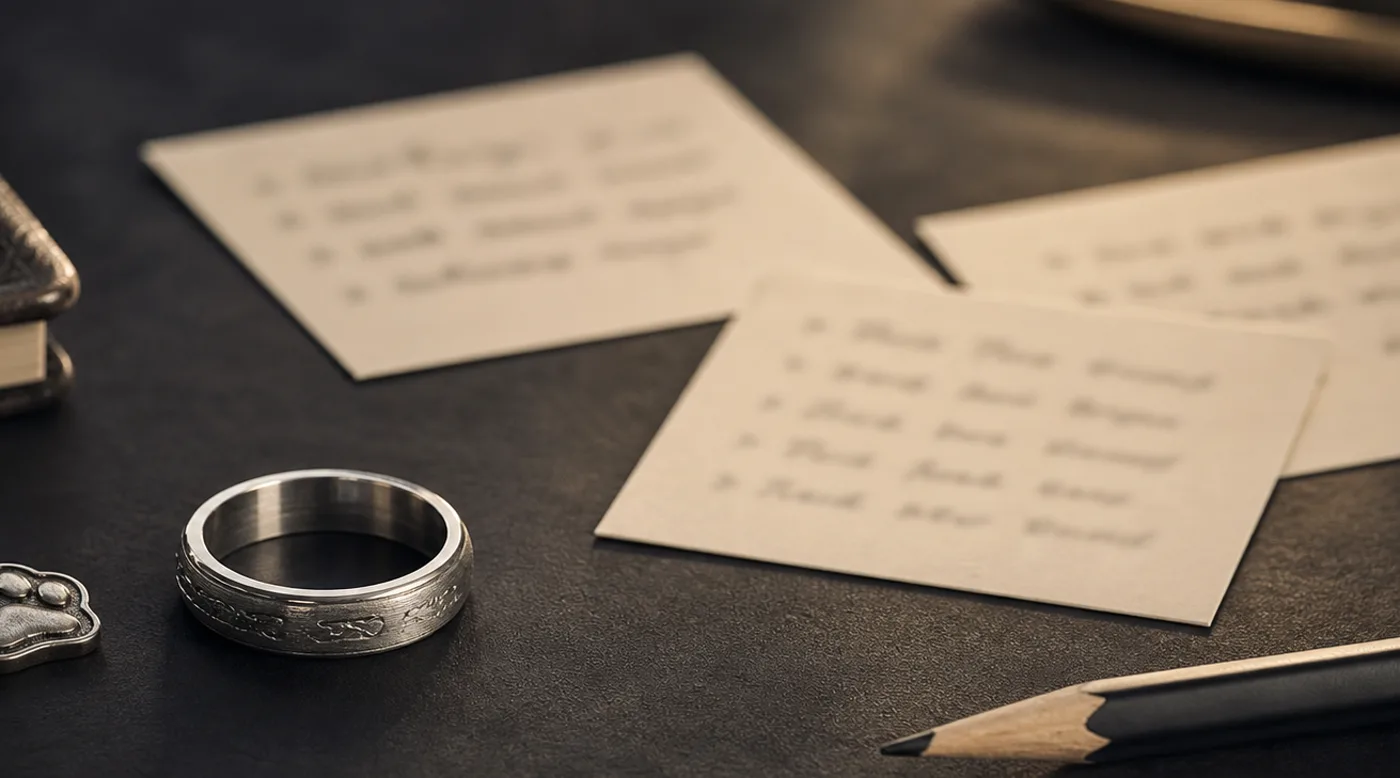
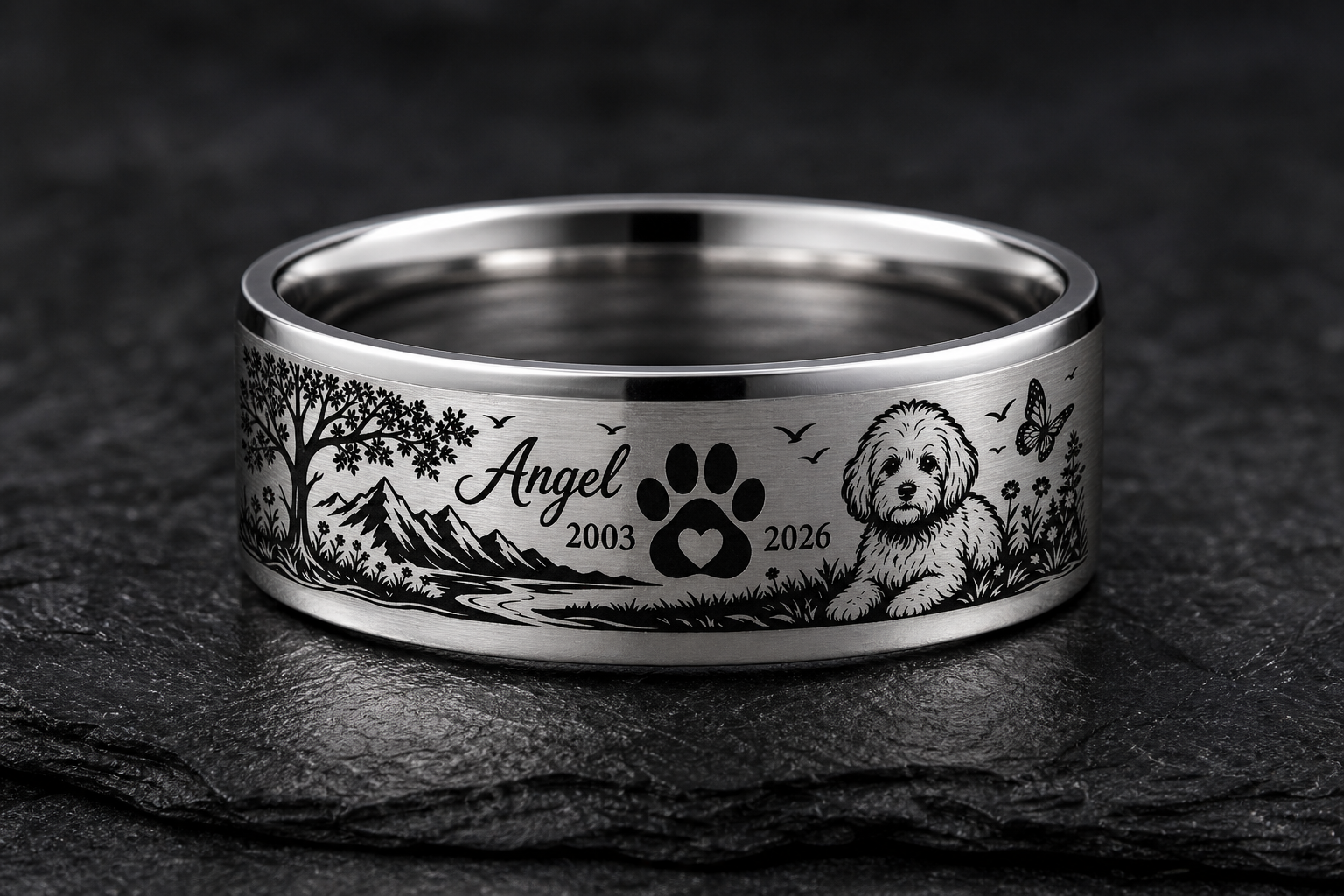
A dog name memorial ring begins with the word the household still reaches for. It may be the full name from the adoption paperwork, but more often it is the nickname said at the back door, on walks, or from the couch without thinking.
Use the name exactly as the family says it. Buddy, Bud, Miss Daisy, Scouty, Old Man, Baby Girl, or Bear can all be stronger than a polished version that no one actually used.
Name length controls the design more than most people expect. A short name can sit outside the band with room for a paw or date. A longer name may need inside placement or a cleaner font so it does not shrink too far.
Dates are optional. Some owners want birth and death years. Others want the adoption date, the year the dog came home, or no date at all because the name is enough.
A paw print can support the name when the source is clear and the ring has room. If the paw print is muddy or the name is long, keep the paw off the outside and let the name remain readable.
A collar tag can be a useful name source. If the tag had a distinctive shape, that outline can frame the name or inspire a small supporting mark.
Inside messages should be short and spoken. "Good boy," "Always home," "Run free," or "My shadow" often feels more specific than a formal pet-loss phrase.
Think about whether the ring should look like pet memorial jewelry at first glance. A visible paw or dog silhouette makes the meaning public. A name-only design can stay private unless the wearer chooses to explain.
Avoid using multiple names unless the dog truly had two that matter. Listing every nickname usually weakens the one name the family most wants to hold.
When the name choice is settled, bring the exact spelling, nickname preference, date choice, and any paw, tag, or photo source into the Friends of Irony designer.