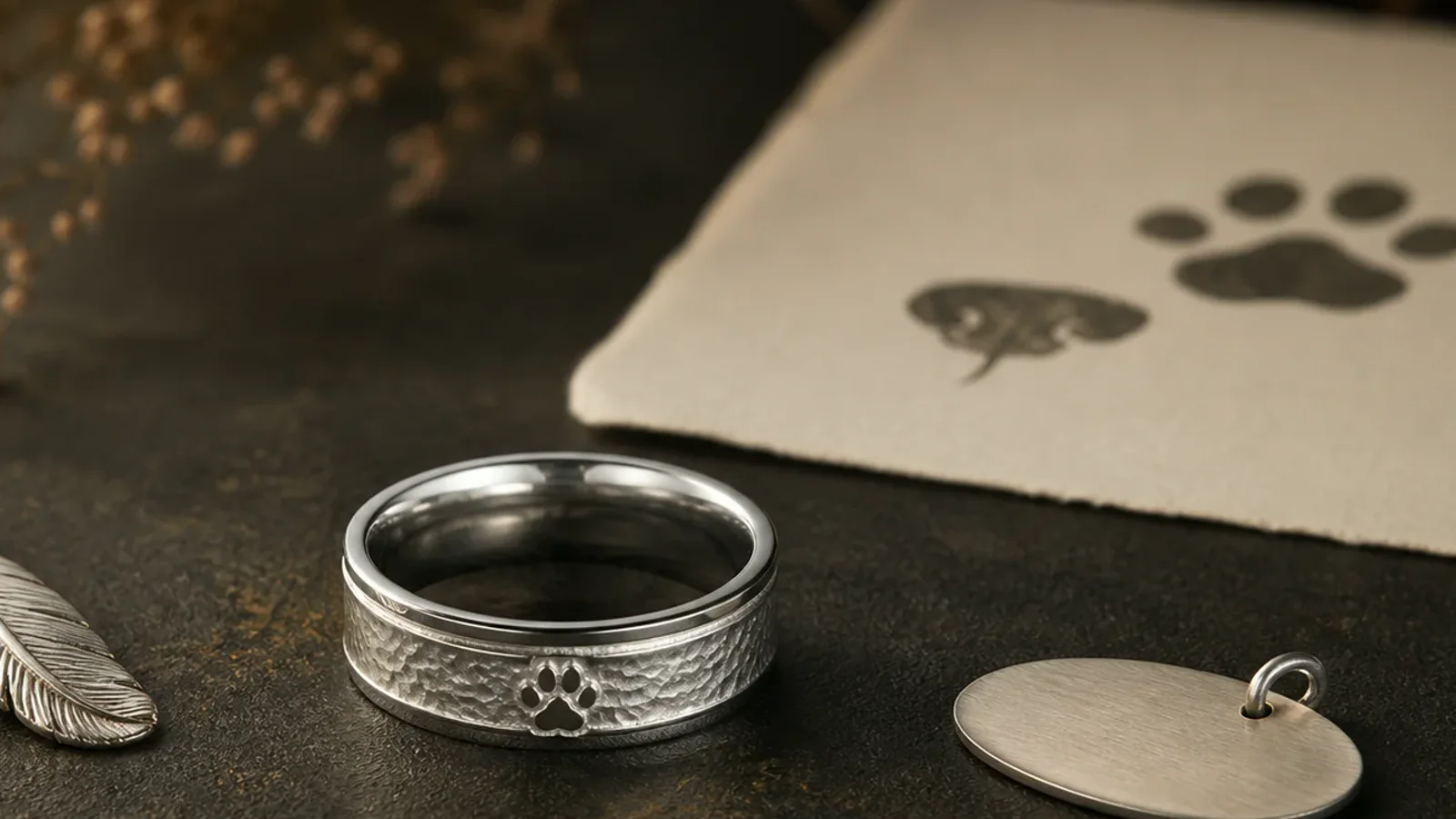
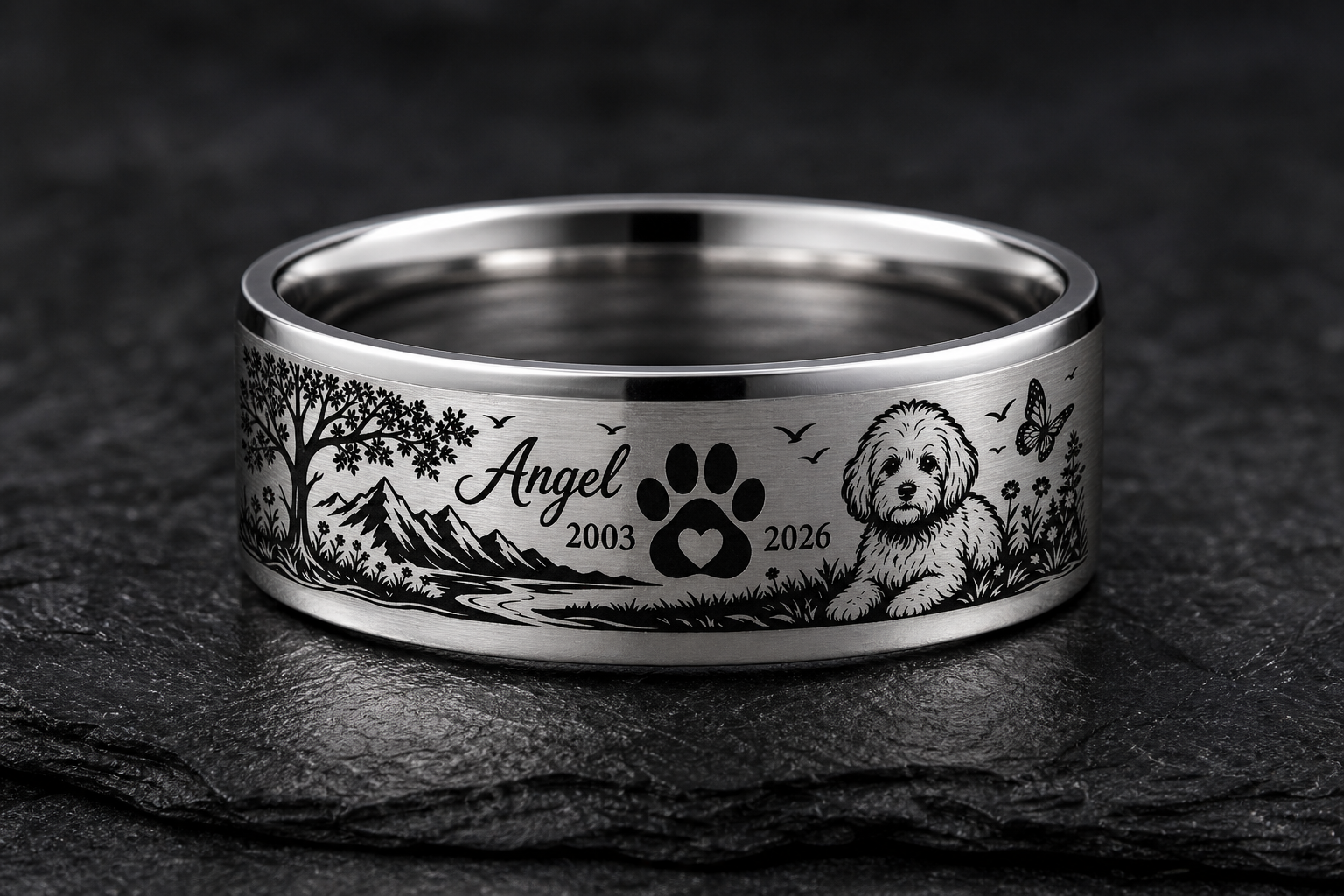
Many families begin with a dog memorial ring for a paw print and discover the best source was never available. That is not a failure, just a different constraint.
The strongest alternative is often a single name detail with years plus one memory marker that is still visually clear at small scale. A tag outline, nose print line, silhouette, or collar charm can all anchor that marker.
If you use a photo as the source, simplify it before design handoff. A tight crop of the face, eyes, or profile usually engraves more clearly than a full scene with many details.
Nose prints can be treated like secondary outside source material, but they need high-contrast capture. A dark background and clean edges give the best output.
For owners who want visibility, keep one symbol outside and the name/date inside. For private wear, place even that symbol inside and leave the outside plain.
Avoid combining three symbols and two dates in the same design. Without a paw print, the ring only has one place to stay legible: the detail you choose first.
If the dog had a known nickname and household role, these can be stronger than a visual source. The words can carry emotional specificity while a simple symbol gives visual balance.
When families request a tribute for a younger dog, avoid age-shaming language. Use the life span as a fact, not a label, and let the ring reflect the bond.
Ask family members for one clean source file before anything else. A blurry or compressed file creates multiple revisions later; one clear source keeps the process humane and faster.
Build the first version with one symbol, one phrase, and one date structure. If the result needs more, add only one extra element at a time.