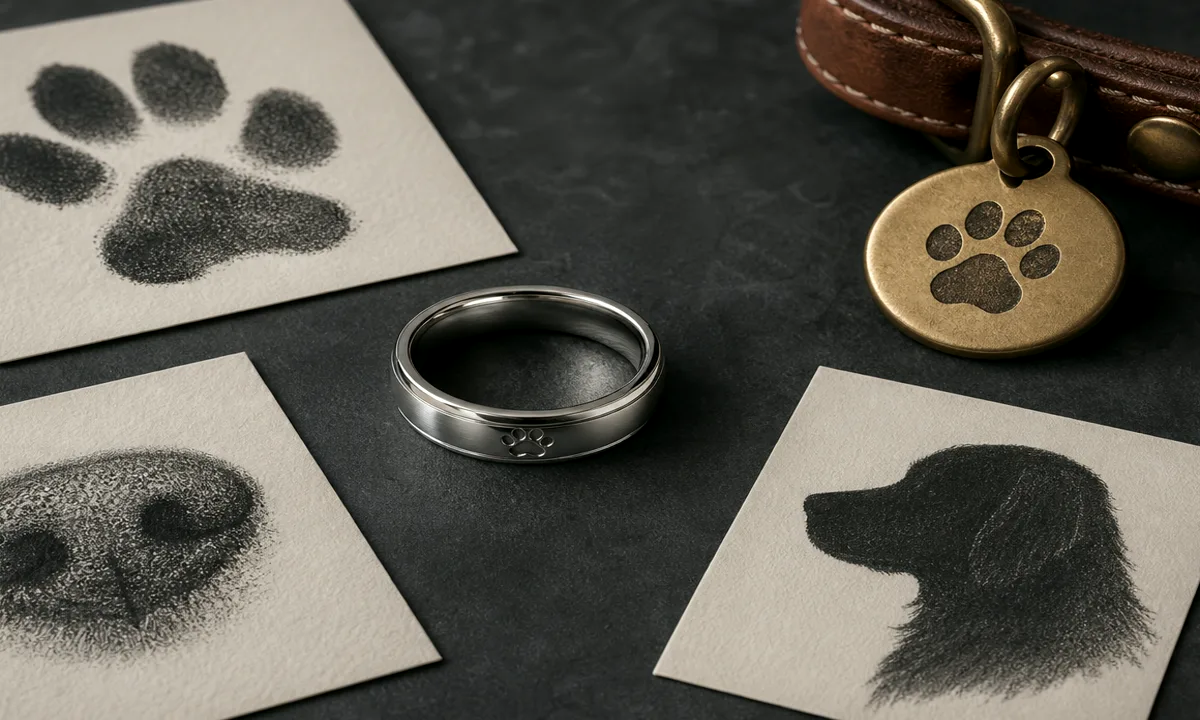
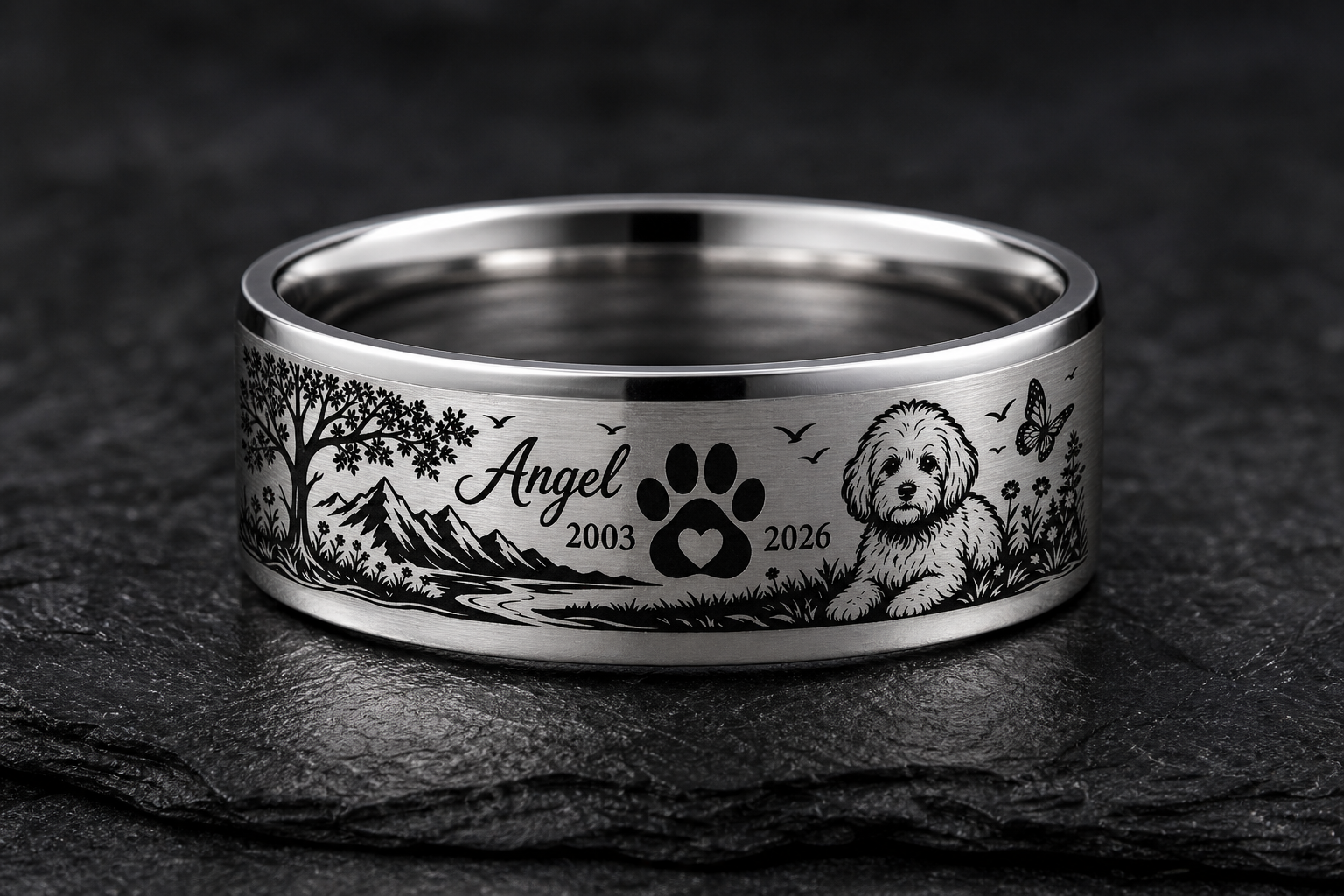
Not every family wants ashes in jewelry, and not every family has ashes available. A dog memorial ring can still feel deeply specific when it starts from a source that belonged to the dog and the life you shared.
Good alternatives include a paw print, nose print, collar tag, favorite photo, breed silhouette, adoption date, trail memory, or the name you said every day. The source should feel real enough that the ring does not need to explain itself.
Start with what you have, not what a memorial product category tells you to want. If you have a beautiful side-profile photo but no paw print, a silhouette may carry more truth than a recreated print.
A no-ashes ring should not apologize for being symbolic. Symbolic does not mean generic when the name, image, date, or phrase comes from the actual relationship.
Keep the outside design focused on one source. A collar tag outline with a name, a paw with a year, or a nose print with initials will usually read better than a full collection of pet-loss symbols.
Inside engraving can carry the more vulnerable line: Wait For Me, Good Boy, Still My Girl, Home With Me, or the greeting the dog knew. The phrase should sound like your household.
For families making decisions soon after loss, it can help to separate keepsake storage from ring design. Save ashes or fur privately if you wish, while the ring carries the visual memory in metal.
Avoid making the ring a technical explanation of what it does not contain. Lead with the dog, the bond, and the source detail instead.
A useful final test is whether the design would still mean something if no one knew the ashes question. If yes, the memorial idea is strong enough on its own.
Bring the available source, dog's name, date, and one note about why you prefer a non-ashes memorial into the Friends of Irony designer.