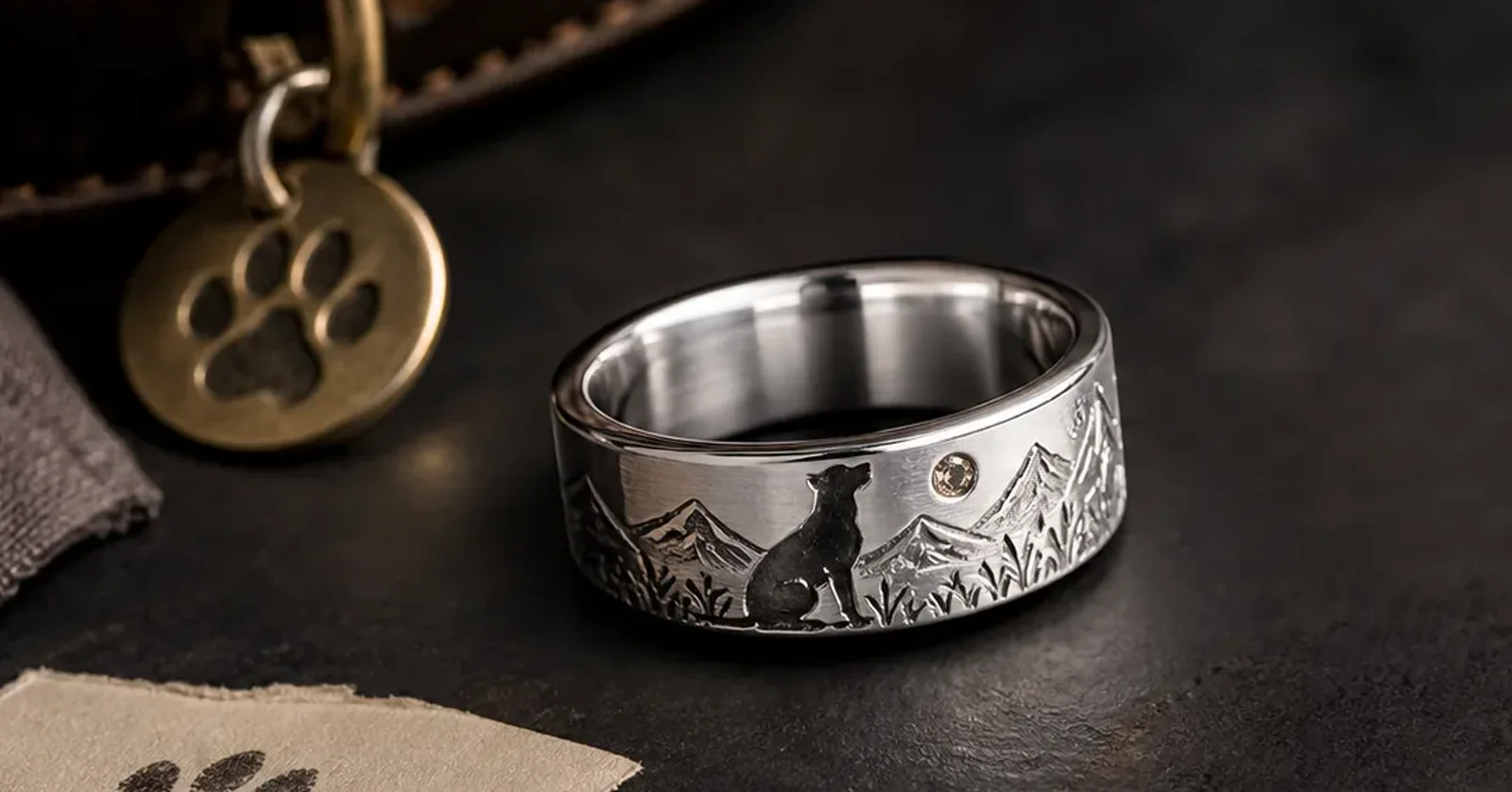
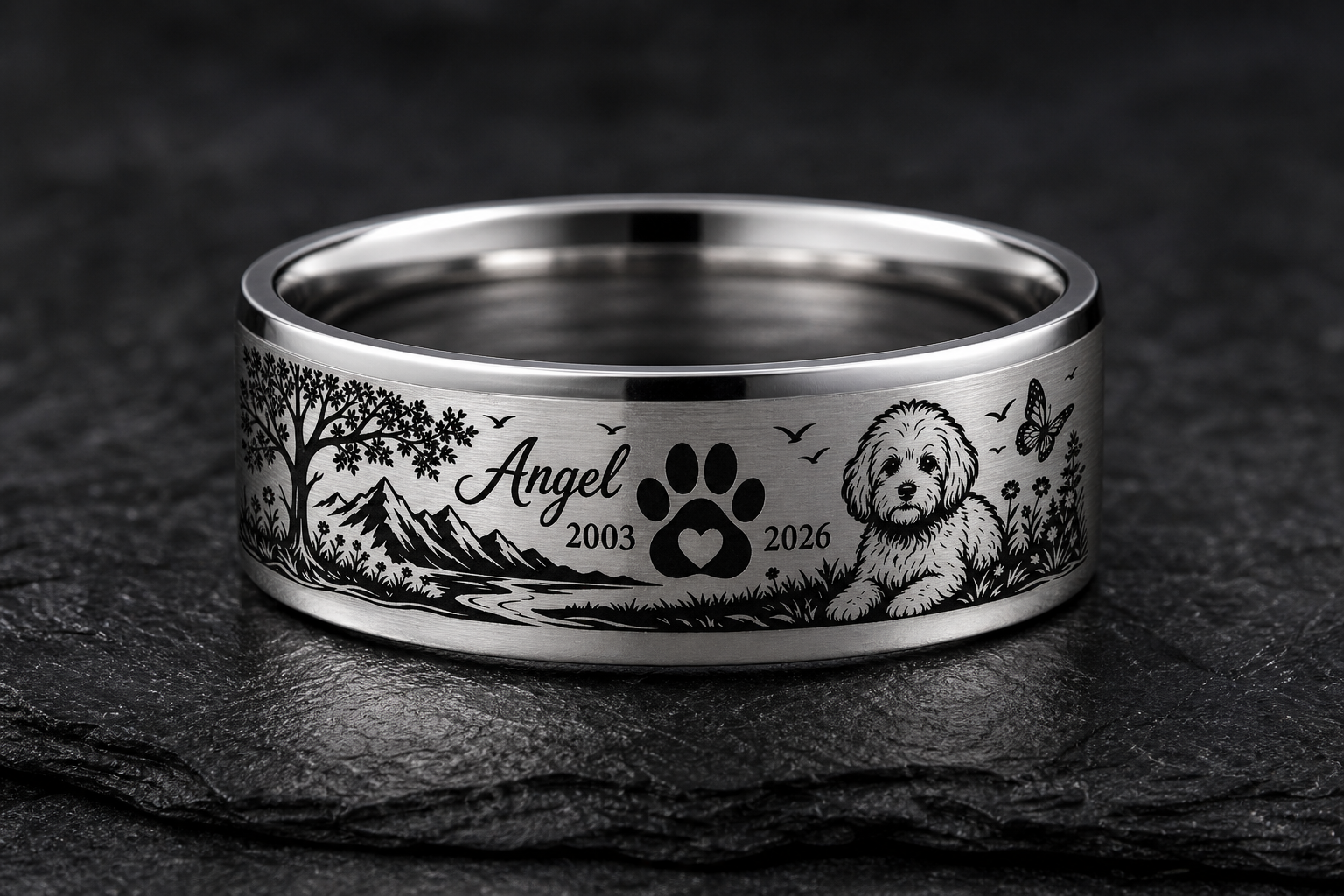
There is no one right shape for a woman wearer, and there is one common mistake: choosing details first and the wearer second. Start with comfort, then place one source memory on the band.
A dog memorial ring for women often works best when it has one readable outside detail and one private text line inside. That way the ring can travel through work, errands, and grief without needing an audience.
Handwritten nicknames from a pet journal, a photo crop from a favorite portrait, a collar tag, or a simple paw mark can all be the source. The key is to choose the one your wearer would recognize with a glance.
If the ring is a gift, ask the wearer about wrist and finger preferences first. A ring built for someone who does not usually wear jewelry can fail for practical reasons before it fails emotionally.
Choose narrow to medium widths when the wearer moves frequently, wears stack sets, or has a daily ring-size variation due to hand swelling. Ring comfort can change the meaning of a design quickly.
Use one design axis only: either a visible symbol or a private phrase. Trying to add a third layer to prove depth often reads as noise.
If your phrase feels too long, shorten it. Long lines are difficult to engrave cleanly and are often the first detail that gets softened during resizing or wear.
A woman's ring vocabulary is not narrow or fixed. The useful distinction is whether the piece should be visibly emotional or privately emotional. Design for that answer before choosing finish.
If multiple women in the same family are grieving, each can carry a matching family source with one different phrase. That keeps unity while preserving each person's relationship.
Once the source and phrase are selected, move to the Friends of Irony designer with the chosen detail, the name, and one line about where and why this dog mattered most.